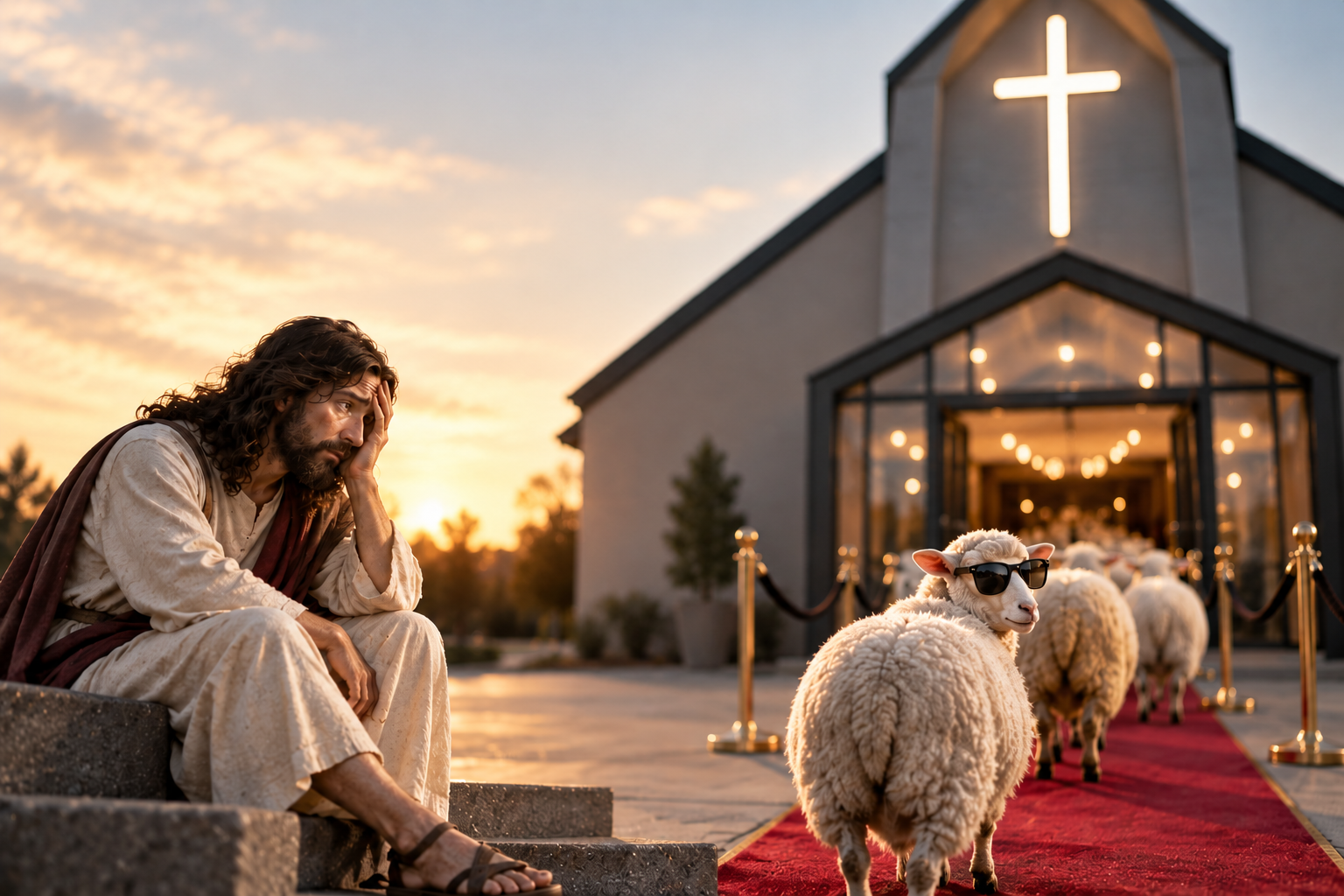
When God's Plans Look Nothing Like Ours
Jeremiah 29:11 is one of the most quoted verses in the Bible, yet it is often misunderstood. Commonly used as a promise of personal success and prosperity, the verse was originally written to the Israelites living in exile. By examining its historical and biblical context, we discover that Jeremiah 29:11 is not primarily about God blessing our plans but about His faithfulness to accomplish His purposes even in seasons of hardship, waiting, and uncertainty.
Preface
Few Bible verses are quoted more often than Jeremiah 29:11.
You'll find it on coffee mugs, graduation cards, social media graphics, and inspirational posters. It is often shared as a reminder that God has a wonderful future waiting for us and that our dreams are destined to succeed. While those sentiments may be well-intentioned, they often miss the original meaning of the passage.
One of the greatest dangers in Bible study is reading ourselves into a text before first understanding what it meant to its original audience. When we do this, we can unintentionally turn God's Word into a collection of motivational sayings rather than allowing it to speak on its own terms.
Jeremiah 29:11 was not originally written to people pursuing personal success, career advancement, financial prosperity, or the fulfillment of their individual dreams. It was written to a nation living under God's discipline, far from home, facing uncertainty, disappointment, and a future that looked nothing like they had hoped. Many of those who first heard these words would never personally see the fulfillment of the promise they received.
Yet this is precisely what makes the passage so powerful.
The hope found in Jeremiah 29:11 is not that God will always bless our plans. Rather, it is that God remains faithful to His plans even when life is difficult, confusing, painful, and uncertain. The verse reminds us that God's purposes are not thwarted by exile, suffering, disappointment, or delay. Even when His people cannot see what He is doing, He is still at work accomplishing His covenant promises.
In a culture that often reduces biblical truth to inspirational sound bites, we need to return to the context of Scripture and allow God's Word to shape our understanding rather than forcing our assumptions onto the text. When we do, we discover that Jeremiah 29:11 offers something far greater than a promise of personal success, it offers confidence in the faithfulness and sovereignty of God.
My hope is that we will see Jeremiah 29:11 as its original readers would have understood it and, in doing so, find a deeper and more enduring hope. Not a hope rooted in favorable circumstances, but a hope rooted in the character of a God who remains faithful even when life unfolds differently than we expected.
Context
The Israelites were discouraged during this time of exile, and much of that discouragement was fueled by the false prophets among them. These prophets were telling the people that their captivity would only last a short time and that they would soon return home. They preached a message that was comforting to the ears but contrary to the word God had spoken through Jeremiah. Scripture, however, shows a very different picture. We know this because God instructed the exiles to build houses, plant gardens, get married, have children, seek Babylon's welfare, and settle into life there. These were not instructions for a temporary stay; they were instructions for a long season of waiting. God was telling them to live faithfully where they were, even though it was not where they wanted to be.
Why did this exile happen in the first place? The prophets had repeatedly warned Judah about their idolatry, injustice, corrupt leadership, false worship, and constant disregard for God's covenant. For generations, God had patiently called His people to repentance through His prophets. Yet instead of responding to His warnings, they chose to listen to the false prophets who promised peace, safety, no judgment, and quick deliverance. They preferred messages that affirmed their desires rather than messages that confronted their sin. As a result, the exile was not simply a political tragedy; it was a covenant consequence of a people who had repeatedly rejected God's word.
We need to recognize that the original audience of this letter was the Israelites living in Babylonian captivity. However, we often miss the point because we immediately place ourselves at the center of the text. God was not promising them immediate relief, financial success, comfort, promotion, or a dream job. He was not telling them that all of their personal goals would soon come to pass. In fact, many of the people hearing this promise would die in Babylon before the restoration ever occurred. The seventy-year exile meant that most adults receiving Jeremiah's letter would never personally return to Jerusalem.
This is what makes the promise so remarkable. Jeremiah 29:11 was not primarily about what God would do for a single individual. It was a corporate and generational promise given to God's covenant people. While individuals would suffer the consequences of exile, God had not abandoned His larger purpose for Israel. He would preserve His people, fulfill His covenant promises, and ultimately bring restoration in His timing. The promise was not that every individual would experience the outcome they desired, but that God's redemptive plan for His people would not fail despite their present circumstances.
Application for Today
Therefore, we need to understand that, in context, Jeremiah 29:11 was about God's sovereign purpose for them. God had plans for their welfare and peace. His purpose in the midst of their exile and captivity was to provide peace, wholeness, well-being, covenant blessing, and the opportunity to flourish under His favor. Judah's exile was not the end of God's plan, and neither are our hardships today.
Today, we must be careful not to miss the point that this passage is about God's sovereign plan for our lives, not merely the plans that we may have chosen for ourselves.
Romans 8:28 aligns with this thought as well: "And we know that in all things God works for the good of those who love him, who have been called according to his purpose." Philippians 1:6 also states, "Being confident of this, that he who began a good work in you will carry it on to completion until the day of Christ Jesus." Lastly, 1 Peter 1:6–9 states: "In all this you greatly rejoice, though now for a little while you may have had to suffer grief in all kinds of trials. These have come so that the proven genuineness of your faith, of greater worth than gold, which perishes even though refined by fire, may result in praise, glory, and honor when Jesus Christ is revealed. Though you have not seen him, you love him; and even though you do not see him now, you believe in him and are filled with an inexpressible and glorious joy, or you are receiving the end result of your faith, the salvation of your souls."
Therefore, we can conclude that Jeremiah 29:11 is not primarily a promise that God will bless your plans. It is a promise that God remains faithful to His plans, even when His people are walking through judgment, suffering, exile, and uncertainty, teaching us that God's faithfulness remains intact even when life looks nothing like we expected.
Why Do We Treat Some Sins Differently Than Others?
Why does the Church often spotlight certain sins while quietly tolerating others? This thought-provoking post explores the inconsistency many Christians wrestle with when it comes to sin, holiness, church culture, and accountability. From gossip and pride to greed and division, this article challenges believers to examine selective outrage within modern Christianity and calls the Church back to biblical humility, repentance, and grace.
Alright, I already know this post may turn some heads, but honestly, these are the kinds of thoughts and questions that come to my mind often. I share them because I’ve come to realize that questions exactly like this can become major stumbling blocks for many people both inside and outside the Church. Whether we like it or not, we have to be willing to wrestle with difficult questions because they directly shape and reveal our worldview as Christians.
So here’s the question:
“If we disqualify those living a gay lifestyle from being used in the local church, then why don’t we also disqualify the gossiper, the glutton, the divisive person, or the arrogant leader?”
Now before anyone tries to twist what I’m saying, let me be clear: yes, sin is serious. Yes, Scripture calls ALL believers to repentance, holiness, and transformation. But somewhere along the way, parts of the Church became very good at spotlighting certain sins while quietly tolerating the ones that thrive within church culture every single week.
For example, a gossiping believer can still lead a ministry. A divisive person can remain on a team. An arrogant leader can continue holding a platform. A manipulative pastor can still preach. A greedy Christian can still be celebrated.
Yet the moment the conversation turns toward sexual sin, suddenly the tone shifts dramatically. And if we’re being honest, that inconsistency is part of why so many people struggle with the Church today.
This post is not about debating whether someone living a gay lifestyle should or should not serve in the local church. The deeper point is to challenge us to think about the hypocrisy and selective outrage that can exist within our man-made church systems.
After all, sin is still sin.
I think the tension many people feel with this question comes from the fact that the Church has often treated certain sins as “category-defining” while quietly tolerating others that Scripture also speaks strongly against.
The Bible absolutely speaks against sexual sin, including homosexual behavior, but it also speaks very seriously about gossip, slander, greed, pride, division, hypocrisy, lack of self-control, unforgiveness, and abusive behavior. Scripture does not give us permission to minimize the sins that feel more culturally acceptable inside church circles while magnifying the ones that are more visible or controversial.
At the same time, there’s an important distinction that often gets lost in conversations like this:
The issue biblically is not whether someone has struggled with sin. If that were the standard, nobody could serve. Every believer is in a battle against the flesh in one way or another. The question becomes whether a person is living in ongoing, unrepentant, openly embraced sin while representing Christ in leadership or ministry without a desire for surrender, accountability, or transformation.
And honestly, that standard should apply consistently across the board.
A person who is openly divisive, manipulative, abusive, greedy, or habitually gossiping without repentance should concern the Church just as much as sexual sin does. Yet many churches have historically been far more willing to platform certain “respectable sins” while drawing hard lines around others.
Scripture actually warns heavily about sins of the tongue and character:
Gossip and slander destroy communities.
Pride corrupts leadership.
Greed exploits people.
Gluttony reveals lack of self-control.
Division damages the Body of Christ.
Hypocrisy harms the witness of the Church.
So in one sense, you’re right: the Church cannot be biblically consistent if it selectively enforces holiness based on which sins make people uncomfortable culturally.
But it’s also important not to flatten everything into “sin is sin” in a way that removes biblical nuance. While all sin separates humanity from God and all people need grace equally, Scripture still recognizes different consequences, different levels of damage, and different qualifications for leadership and ministry responsibility.
The goal should never be:
“Which sinners do we exclude?”
Because all of us are sinners.
The goal should be:
“Are we all submitting our lives to Christ in repentance, humility, and transformation?”
That includes the heterosexual person sleeping around.
That includes the gossiping church member.
That includes the arrogant pastor.
That includes the greedy leader.
That includes the person struggling with same-sex attraction.
The Church is supposed to be a community of repentance and restoration, not selective outrage.
Does the Church You Attend Show Indicators of a Cult-Like Shift?
How do you know whether a church is healthy or spiritually controlling? This article explores the warning signs of unhealthy church leadership, fear-based control, manipulation, leadership insulation, and indicators of a cult-like shift within church culture through a biblical lens rooted in discernment, accountability, and Christ-centered leadership.
Healthy vs Unhealthy Church Culture, Biblical Accountability, and Christ-Centered Leadership
Introduction
Many believers struggle to recognize the signs of a cult-like church because unhealthy church leadership and spiritually controlling church culture often develop gradually over time. Most churches that drift into unhealthy patterns do not begin with obvious corruption or blatant abuse. In many cases, the church may appear spiritually vibrant on the surface. The sermons may sound biblical. Worship may feel powerful. Attendance may be growing. Programs may be thriving. Yet underneath the surface, unhealthy leadership systems can slowly develop until the church begins functioning more like a controlled institution than the Body of Christ.
This is why biblical discernment matters.
Many sincere Christians have spent years in spiritually controlling churches without realizing it because unhealthy church culture became normalized to them. Over time, fear, manipulation, intimidation, and emotional dependency begin to feel like normal expressions of spiritual authority. Questioning leadership becomes labeled as rebellion. Loyalty to the institution becomes confused with loyalty to God. Protecting leadership becomes more important than protecting people. What begins as “strong leadership” slowly becomes authoritarian leadership.
This article is not written to attack the Church. It is written because many believers genuinely do not realize that what they are experiencing may not actually reflect healthy biblical church culture or Christ-centered leadership. The goal is not to encourage rebellion, cynicism, or church division. The goal is to help believers discern the difference between healthy church leadership and spiritually controlling church systems that have drifted away from the example Jesus established.
Jesus never manipulated people through fear. He never built systems designed to insulate himself from accountability. He never discouraged people from examining the truth. Instead, Christ consistently pointed people toward the Father, toward truth, toward freedom, and toward spiritual maturity. Healthy churches do the same.
The Apostle Paul instructed believers in 2 Timothy 2:15 to “study to show themselves approved unto God… rightly dividing the word of truth.” In context, Paul is emphasizing the importance of accurately handling Scripture. The phrase “rightly dividing” means to correctly interpret and properly handle truth. This matters because spiritually controlling churches often misuse Scripture by removing verses from context or practicing eisegesis, which is reading personal agendas into biblical texts rather than drawing out the intended meaning from the passage itself. A church can quote Scripture constantly and still misuse it. Satan himself quoted Scripture in the wilderness temptation of Jesus. The issue has never simply been whether Scripture is quoted, but whether it is rightly understood, rightly divided, and rightly applied.
Healthy vs Unhealthy Church Culture
One of the clearest distinctions between a healthy church and an unhealthy church culture is the way leadership authority is exercised. Scripture consistently presents church leadership as servant-oriented rather than authoritarian. Jesus directly addressed abusive leadership structures in Matthew 20:25–28 when He told His disciples, “The rulers of the Gentiles lord it over them… It shall not be so among you.” In context, Jesus was contrasting worldly leadership models built on domination and control with Kingdom leadership built on humility and servanthood. The phrase “lord it over” refers to oppressive authority structures where leaders exercise power for self-preservation and personal control. Jesus explicitly rejected this model for spiritual leadership within His Church.
Instead, Christ declared, “Whoever would be great among you must be your servant.”
This is important because many spiritually controlling churches function through the very leadership model Jesus condemned. Some pastors control every major decision within the church while simultaneously surrounding themselves with people whose primary role is protecting leadership rather than protecting the congregation.
I witnessed this firsthand during a church board nomination process. Before the congregational meeting where members would vote on board nominees, the pastoral staff was brought into a private meeting. During this meeting, names of potential nominees were discussed, and staff members were asked whether there were concerns about certain individuals. At first glance, the process appeared collaborative and spiritually responsible. However, the reality was very different. At the end of the process, the pastor himself retained final authority over which names would actually appear before the congregation for voting. While members believed they were participating in a meaningful process, the options had already been carefully filtered beforehand.
The pastor was not primarily searching for spiritually mature leaders who would help provide healthy accountability or make difficult decisions for the good of the church as a whole. He was searching for “yes men.” Men who would defend him. Men who would preserve his authority. Men who would avoid challenging leadership decisions. Men who would function more as insulation around the pastor than as shepherds for the congregation.
This is not healthy church leadership.
This is institutional self-protection.
And unfortunately, this pattern exists in far more churches than many believers realize.
A healthy church protects truth even when it is uncomfortable. An unhealthy church culture protects leadership image and institutional power at all costs. Healthy pastors understand that the Church belongs to Jesus Christ, not to themselves. Their role is to equip believers for spiritual maturity, not emotionally condition people into dependence upon leadership approval.
Paul writes in Ephesians 4:11–13 that church leaders exist “for the perfecting of the saints, for the work of ministry, for the edifying of the body of Christ.” The purpose of leadership is, therefore, equipping believers, not controlling them. Healthy churches ask, “How can we help people grow in Christ?” Spiritually controlling churches often function from a different question: “How can we preserve loyalty to leadership and the institution?”
Signs of Spiritually Controlling Churches
One of the clearest signs of spiritually controlling churches is the use of fear to maintain loyalty and compliance. In unhealthy churches, members may hear statements such as, “If you leave this church, your life will fall apart,” or “You are stepping outside God’s covering,” or “Questioning leadership opens the door to deception.” These statements create emotional and psychological dependence on the institution rather than on Christ.
Yet Scripture teaches something very different about the nature of God’s leadership. Paul writes in 2 Timothy 1:7, “For God hath not given us the spirit of fear; but of power, and of love, and of a sound mind.” In context, Paul is motivating Timothy to exhibit bravery and perseverance in the face of adversity. The biblical principle remains clear: fear is not the primary mechanism through which God leads His people.
Conviction is different from control. The Holy Spirit convicts believers toward repentance and freedom. Manipulative leadership uses fear to produce compliance and dependence. This distinction is essential because many emotionally controlling church cultures confuse intimidation with spiritual authority.
Another indicator of a cult-like shift in church culture is when questioning leadership becomes spiritually dangerous. In healthy churches, leaders may not always agree with criticism, but they remain accountable and open to examination. In unhealthy environments, however, disagreement is often labeled as rebellion, division, gossip, or spiritual attack. Over time, members become afraid to ask questions for fear of being labeled disloyal or spiritually immature.
Healthy churches encourage discernment. Spiritually controlling churches often fear it.
Biblical Accountability in Church Leadership
One of the most dangerous aspects of unhealthy church leadership is the misuse of Scripture to justify manipulation and silence accountability. One of the most common examples is the misuse of the phrase “touch not mine anointed”. In many spiritually controlling churches, this verse is used to discourage members from questioning leadership or addressing misconduct. However, this interpretation completely ignores the broader context of Scripture.
The New Testament repeatedly teaches that leaders are accountable before both God and the Church. In 1 Timothy 5:19–20, Paul instructs, “Against an elder receive not an accusation, but before two or three witnesses. Them that sin rebuke before all, that others also may fear.” This passage demonstrates balance. Leaders should not be falsely accused carelessly, but neither are they immune from correction or accountability.
Healthy leadership welcomes accountability because accountability protects both the church and the integrity of leadership itself. Controlling leadership fears accountability because accountability threatens control.
Leaders who operate through fear, manipulation, intimidation, coercion, or total control are fundamentally disqualified from leading God’s people in a Christlike manner. The pulpit was never intended to become a throne from which leaders build personal kingdoms or surround themselves with unquestioning loyalty. A shepherd leads people toward Christ. A controller leads people toward dependency.
Churches Without Accountability
This raises another deeply important question many hurting believers eventually ask: Where are the overseers? Where are the district leaders, denominational authorities, bishops, executive presbyters, and spiritual overseers who were entrusted to provide accountability for pastors and churches? Why are so many unhealthy leaders allowed to continue operating without meaningful correction?
Scripture clearly establishes the importance of oversight within the Church. In Titus 1:5, Paul instructs Titus to appoint elders and establish order within the churches. Throughout the New Testament, leadership was never intended to function independently without accountability. There were systems of correction, doctrinal examination, mutual submission, and shared oversight.
Yet in many modern church structures, oversight has become passive, political, or performative. In some cases, overseers avoid confrontation because the church is financially successful, numerically growing, or influential within the denomination. In other situations, leaders protect one another because exposing serious problems could damage reputations, ministries, giving structures, or organizational stability. Sometimes relationships between leaders become so intertwined that accountability becomes almost impossible.
The result is devastating. Hurting members are often ignored. Whistleblowers are labeled divisive. Concerns are minimized. Manipulation is excused as a personality issue. Control is rebranded as “strong leadership.” Meanwhile, the people suffering underneath these systems are left spiritually confused, emotionally wounded, and questioning whether anyone actually sees what is happening.
Oversight without courage is not true oversight. Accountability that only exists on paper is not biblical.
What Does a Healthy Biblical Church Look Like?
A healthy biblical church equips believers to stand firmly upon Scripture and grow in discernment. The goal of discipleship is not to create emotional dependence upon pastors or organizations, but to help believers become rooted in Christ. The Bereans in Acts 17:10-12 provides an important example. Scripture says they “searched the scriptures daily, whether those things were so.” The Bereans were praised because they examined Paul’s teaching against Scripture itself. Paul did not condemn their discernment as rebellion. Their willingness to examine truth carefully was considered spiritually noble.
Healthy leaders encourage this type of discernment. Spiritually controlling churches often fear it.
One of the clearest indicators of an unhealthy church culture is whether members become increasingly incapable of functioning spiritually outside the institution itself. If believers feel unable to trust God, interpret Scripture, make decisions, or maintain relationships without leadership approval, discipleship has likely been replaced with dependency.
Healthy churches produce believers who are humble, loving, biblically grounded, emotionally healthy, spiritually mature, and increasingly dependent upon Christ. Spiritually controlling churches often produce people who are fearful, defensive, emotionally exhausted, dependent upon leadership approval, afraid to ask questions, and suspicious of outsiders.
In Matthew 7:16, Jesus taught His disciples, along with the surrounding crowd, during the Sermon on the Mount, “You will know them by their fruits.” The fruit always reveals the root.
Conclusion
The Church was never intended to become a system of spiritual control built around personalities, institutional loyalty, or authoritarian leadership structures. Jesus Christ established His Church to be a community where believers grow in truth, freedom, humility, accountability, discernment, and dependence on God.
Therefore, churches that consistently operate through fear-based leadership, manipulation, suppression of questions, emotional dependency, leadership insulation, and unaccountable authority display clear indicators of a cult-like shift away from healthy biblical Christianity.
This issue is not about promoting rebellion against leadership. It is about defending the biblical model of leadership that Jesus Himself established.
Healthy churches point people toward Christ. Controlling churches slowly trains people to depend upon leadership and the institution instead.
And only one of those reflects the heart of God.
Sources & Recommended Reading
Is the Church in America Declining? What’s Really Happening, and Why We Need to Face It
The Church in America may not be declining as rapidly as it once was, but that doesn’t mean it’s healthy. Beneath the surface, deeper issues are emerging: disengagement, shallow discipleship, and a growing hunger for authenticity. What if what we’re calling stability is actually a wake-up call?
Prelude: What Sparked This Conversation
This post didn’t begin with statistics or studies. It originated from a feeling I’ve had for some time now, a persistent worry that I can’t quite shake off. I’ve been observing, listening, and being mindful… and what continually emerges is a more profound issue within much of the Western Church. It’s not merely about dwindling attendance, but something deeper. Something more challenging to quantify. A deficiency in genuine discipleship. A battle with authenticity. A tendency to focus on the wrong priorities. And then this question kept resurfacing in my mind: Why are there regions across the globe witnessing what appears to be true, transformative revival… while here in the West, we’ve been praying for revival for many years, and what we often experience are fleeting moments we label as revival, yet they don’t seem to endure?
If we’re being truthful, much of what we refer to as "revival" often resembles a dynamic service, an emotional reaction, or perhaps even a crowded venue for a short period. However, true revival is not merely a fleeting moment. It signifies transformation. It alters hearts. It redefines lives. It influences families, communities, and culture. The Scriptures illustrate this concept vividly: "If my people who are called by my name humble themselves, and pray and seek my face and turn from their wicked ways..." (2 Chronicles 7:14). Pay attention to what is associated with it: humility, repentance, and turning away. It’s not just about experiencing emotions, but genuinely changing our course. This prompts a crucial question we must confront: Are we pursuing the facade of revival… while overlooking the prerequisites that foster it? This inquiry inspired me to examine the reality of what is taking place within the Church in America, focusing not just on our feelings but on the actual situation.
So… Is the Church Actually Declining?
If you examine the data, the conclusion is both straightforward and complex. Indeed, the Church in America has been experiencing a decline for decades. Fewer individuals are attending services regularly. An increasing number of people are identifying as having no religious ties. For the first time in history, church membership has fallen below fifty percent of the population. That’s a significant reality. However, what’s intriguing is… This decline has started to decelerate. We are no longer witnessing the same steep declines we used to see. In many respects, the situation has stabilized, not into growth, but rather into what could be described as a new normal. And that’s where it becomes complicated. Because a sense of stability can resemble health… even when it isn’t. Just because the figures aren’t plummeting as rapidly doesn’t imply that the Church is flourishing. In numerous areas, it feels less like we’re making progress and more like we’re merely trying to maintain our position. Pastors sense it. Leaders sense it. Churches sense it. There exists a subtle tension: Things aren’t falling apart… but they’re not transforming either.
Where the Assemblies of God Fits In
Before I proceed, I want to clarify something. I’m specifically referring to the Assemblies of God USA because it’s my area of expertise. It’s the environment I’ve lived in, served within, and experienced directly. However, I’m not suggesting for a moment that what I’m discussing is exclusive to a single denomination. This isn’t merely an "Assemblies of God issue." It’s a conversation that spans the entire Church. I’m simply beginning with what I understand best. Honestly, the Assemblies of God has a fascinating narrative. In many respects, it has shown more resilience than other denominations. There’s a significant focus on the work of the Holy Spirit, evangelism, and outreach. In certain periods, it has even seen growth, while others have faced decline. Yet, if you examine it more closely and have been involved long enough, you begin to observe something beneath the surface. Some churches are flourishing. Others are stagnating. Some are subtly declining. Attendance isn’t as reliable as it used to be. And younger generations are engaging in different ways than before. So, while things may appear stable on the surface, there’s a more profound question we cannot overlook: Are we truly shaping individuals… or merely gathering them? Because that question is not limited to one denomination. It pertains to all of us.
What’s Really Driving This?
At some point, we need to move beyond merely asking what is happening and begin to inquire why. The responses we receive are not always easy to digest. One of the most significant challenges we face is discipleship, or more precisely, the absence of it. Many individuals have encountered Jesus… but have not been deeply transformed by Him. Paul states: "Therefore, as you received Christ Jesus the Lord, so walk in Him, rooted and built up in Him…" (Colossians 2:6–7). The term "rooted" is crucial. Because without roots, nothing endures. For many years in America, participation in church was bolstered by societal norms. It was anticipated. It was customary. In some respects, it even provided social advantages. However, that is no longer true. Now, what was once upheld by culture must be supported by personal conviction. And if that conviction is absent… people tend to leave. Simultaneously, there is an increasing tension surrounding authenticity. Individuals, particularly younger generations, are posing more challenging questions. They are keenly observing whether the messages delivered align with the actual lives of those who deliver them. And when a discrepancy exists, they can sense it. Jesus didn’t overlook that issue either: “Woe to you… hypocrites…” (Matthew 23:27). People aren’t merely distancing themselves from theology. Frequently, they’re stepping away from what seems inconsistent or inauthentic. Moreover, in certain areas, the church has focused more on crafting experiences rather than nurturing lives. Moments instead of growth. Inspiration instead of real change. Paul cautions against this as well: “Having the appearance of godliness, but denying its power.” (2 Timothy 3:5). And then there’s a topic we don’t address enough, doubt. Many individuals are grappling with genuine questions, real pain, and true struggles… and at times, they may feel there’s no room for that in the church. However, Scripture doesn’t reject doubters: “Have mercy on those who doubt.” (Jude 1:22). When those inquiries remain unanswered, distance often ensues. Not all at once. Not in a dramatic fashion. But gradually. Silently.
The Danger of Pretending Everything Is Fine
This is where things become truly significant. There’s often a temptation, whether subtle or glaring, to minimize all of this. To maintain a positive outlook. To steer clear of difficult discussions. To safeguard the church's reputation. However, the issue is that turning a blind eye to reality doesn’t resolve anything. Jesus stated: "You will know the truth, and the truth will set you free." (John 8:32). And Proverbs reminds us: "Faithful are the wounds of a friend…" (Proverbs 27:6). While truth may be uncomfortable, it is essential. Choosing to remain ignorant is not an act of faith. It is simply avoidance.
A Call to Wake Up, Not Cover Up
If we truly have faith in the Church, if we genuinely see it as the Body of Christ, then we should not hesitate to bring matters into the open. Paul states, "Do not participate in the unproductive deeds of darkness, but rather reveal them." (Ephesians 5:11). Bringing things to light is not about dismantling the Church. It’s about restoring it. You cannot heal what you refuse to recognize.
What If This Is Actually Refinement?
There’s another perspective to consider regarding all of this. What if what we’re witnessing isn’t merely a decline? What if it’s actually a process of refinement? Scripture states: “… that He might present the church to Himself in splendor, without spot or wrinkle…” (Ephesians 5:25–27). And also: “It is time for judgment to begin at the household of God…” (1 Peter 4:17). God has always prioritized the purity of His people over the size of the congregation. So perhaps what seems like a loss… is truly God eliminating what was never deeply established. Not to destroy the Church, but to purify it.
So Where Does That Leave Us?
The inquiry isn't merely: "Are individuals departing?" The more profound question is: What type of Church are we evolving into? For a smaller Church that is anchored true to itself, profoundly shaped ... holds far greater strength than a larger one that lacks these qualities.
So Where Do We Go From Here?
We shouldn't fear the current situation. However, we must be truthful about it. Because when we confront it, we cease to perform. We begin to repent. We transition from attracting crowds… to nurturing disciples. And perhaps, just perhaps, what appears to be a decline is truly God getting His Church ready to be established, purified, and prepared.
Let’s Keep the Conversation Going
This isn’t merely a text to glance at and forget. It’s an issue we must grapple with, together. What do you observe in your own journey with the Church? Does this strike a chord with you, or has your experience varied? Where do you believe we’ve succeeded… and where do we have room for improvement? Please share your thoughts in the comments. I would truly appreciate hearing your viewpoint.
When the Sign Became the Center: A Needed Conversation About the Holy Spirit and Mission
Have we subtly shifted from mission to manifestation? This post explores whether the modern emphasis on tongues aligns with the biblical purpose of Spirit empowerment in Acts and the Great Commission.
Let’s have an honest conversation for a moment. There has been a change in certain areas of the contemporary charismatic movement. It’s not universal. It doesn’t apply to every congregation. However, it’s significant enough that we must recognize it. The Holy Spirit, intended to empower the Church in its mission, has in some contexts become the focal point of experience rather than the driving force behind our witness. This change is important. When the focus changes, everything else follows suit.
What Jesus Actually Said
In Acts 1:8, He says: “You will receive power when the Holy Spirit has come upon you, and you will be my witnesses…” That statement is clear. It does not imply, "You will gain power merely to experience something." It does not suggest, "You will gain power to possess a higher spiritual status." It states power… for testimony. The Spirit was sent so that timid followers could transform into courageous messengers. The direction is outward, Jerusalem, Judea, Samaria, and the farthest reaches of the earth. The coming of the Spirit is directly linked to the spread of the gospel. Mission is not an added benefit of the Spirit. Mission is the core purpose. The Commission Was Already Clear. Jesus had already given the command in Matthew 28:18–20: “Go therefore and make disciples of all nations…” The sole directive in that passage is to "make disciples." So, let’s pose this question: How can ordinary, fearful individuals make disciples of entire nations? They cannot. Not without divine power. Therefore, they wait. They are "clothed with power from on high" (Luke 24:49). And when the Spirit descends in Acts 2, something extraordinary occurs, not merely on an emotional level, but on a mission-driven one. Yes, tongues are spoken. But what comes next? Public proclamation. Christ is preached. Repentance is called for. Three thousand are baptized. The Spirit descends, and the gospel moves forward. That’s the established pattern.
Tongues in Context
Now, let's confront the conflict head-on. Indeed, tongues are mentioned in Acts 2. However, they are not mere random ecstatic utterances devoid of meaning. Instead, they are comprehensible to the nations that were there. They proclaim the magnificent deeds of God. They act as a sign that the gospel is intended for all. Then, Peter rises to proclaim Christ's crucifixion. Tongues supported the mission. They were not the mission itself. This distinction is crucial.
When Fascination Replaced Focus
Fast forward to Corinth. In 1 Corinthians 12–14, Paul addresses a church that had become captivated by specific spiritual gifts, particularly tongues. So, what action does he take? He doesn’t prohibit the gift. However, he will not allow it to overshadow everything else. He reminds them that not everyone can speak in tongues. The Spirit allocates gifts according to His own will. Love surpasses any gift. Five clear words hold more value than ten thousand words that cannot be understood. Everything should contribute to the growth of the Church. Paul’s correction is both subtle and impactful. The question isn’t about the existence of the gift. The real question is whether the gift has become the focal point. And that’s where we must reflect honestly in our own time.
The Modern Drift
In certain charismatic settings today, speaking in tongues has subtly transformed into: The foremost indication of Spirit baptism, the standard for spiritual maturity, the crucial sign of authenticity, and the emotional climax of worship services. When this occurs, the focus shifts. Instead of Spirit to Christ and Christ to Mission, it shifts to: Spirit to Manifestation and Manifestation to Experience. This may seem minor, but it is significant. When manifestation takes precedence, mission is relegated to a secondary role. When experience is the yardstick, obedience becomes a matter of choice. When tongues are worn as a badge, love and courage can often be overlooked. And that deviates from the pattern established in Acts.
What the Spirit Actually Does
Scripture clearly outlines the priorities of the Spirit: He brings glory to Christ, He convicts us of our sins, He cultivates the fruits of the Spirit, love, joy, peace, and patience, He empowers us to be witnesses, and He strengthens the community of believers. The most evident sign of the Spirit's presence is not ecstatic utterances. It is a life shaped by the cross. It is the courage to stand firm against opposition. It is a love that requires sacrifice. It is unwavering faithfulness in challenging times. It is a commitment to making disciples. If we can speak in tongues yet remain silent about Jesus to our neighbors, there is a disconnect. If we can demonstrate power during a service but lack the bravery to stand up in public, something is amiss.
The Hard Truth
This is where things become uncomfortable. When we position speaking in tongues as the primary indicator of Spirit baptism, we establish a theological foundation that Scripture does not require. By suggesting that those who do not speak in tongues are in any way spiritually deficient, we go against Paul’s explicit teaching that not everyone speaks in tongues. When we evaluate spirituality based on manifestations instead of mission, we have altered our focus. If we are truthful, some of the beliefs we defend fervently are not rooted in biblical necessity, but rather in inherited traditions. We have constructed systems around personal experiences. At times, we have mistaken intensity for authenticity.
If We Want to Get Back to Mission
If the Spirit was sent to empower the Church for the Great Commission, we must confront some difficult questions. Are we recognized more for our manifestations than for our missionary presence? Are we concentrating more on what occurs during our gatherings than on what transpires in our communities? Are we more enthusiastic about signs than we are about making disciples? If the answer is yes, even in part, then returning to our mission demands more than mere adjustments. It calls for repentance. Not repentance from the Spirit. But repentance from misguided theological foundations. We must relinquish the notion that a secondary sign serves as the primary evidence of spiritual vitality. We must discard any theology that establishes spiritual hierarchies within the body. We must let go of the allure of spectacle if it diverts us from obedience. And we must reclaim this fundamental truth: The Holy Spirit was not given to enhance the Church's image. He was given to ensure the Church's faithfulness as faithful witnesses, faithful disciples, and faithful proclaimers of a crucified and risen King. Until we return to that core, we will keep confusing manifestation with mission. And the world does not require more spiritual performances. It needs a Spirit-empowered Church that genuinely makes disciples.