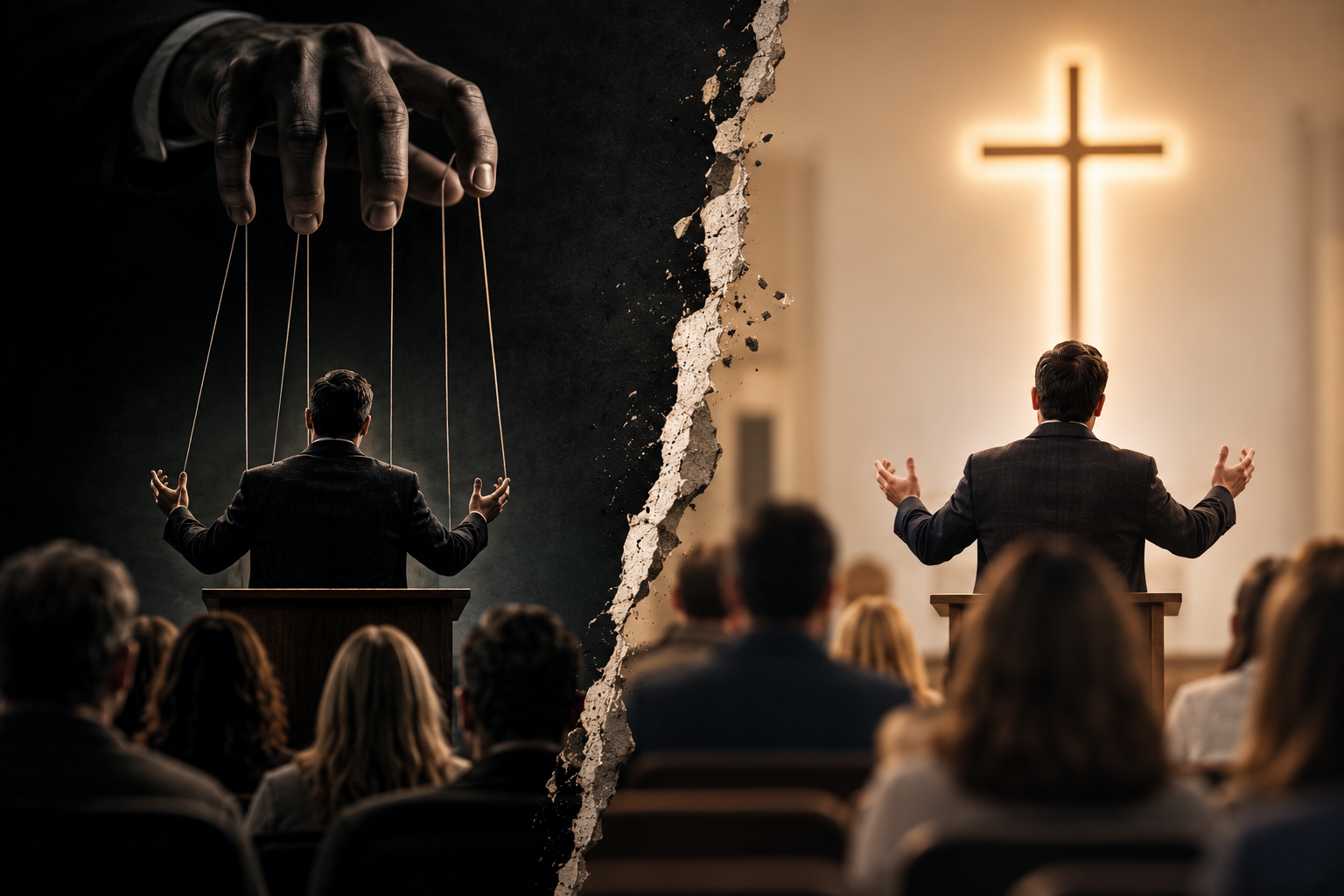
When Leadership Changes… But Nothing Else Does
Leadership transitions often promise change, but what happens when the same problems keep showing up? This post explores why swapping leaders doesn’t always lead to new outcomes and what it really takes to break the cycle.
Why We Keep Getting the Same Results
There’s a common saying that gets repeated often: "Insanity is doing the same thing over and over while expecting different results." I’m not sure if Albert Einstein actually originated this phrase, but its core message strikes a chord, particularly in the realm of leadership. If we take a moment to reflect honestly, we might uncover something quite troubling: Many organizations, including churches, aren’t necessarily facing a shortage of leadership changes. They are grappling with a lack of authentic transformation. Leaders come and go. Titles change hands. New individuals take on old responsibilities. Yet, somehow, the results remain hauntingly similar.
The same cycles repeat. The same conflicts arise again. The same challenges that once sparked change seem to resurface quietly. At some point, we must ask ourselves: Are we genuinely seeking transformation, or are we merely managing appearances? Because there is a distinction. It’s entirely feasible to change leadership without altering the course. To replace an individual without addressing the underlying patterns. To make a move that appears significant, without it truly being impactful. And often, that’s precisely what occurs. We tend to believe that a new leader will automatically yield new outcomes.
However, leadership does not function in isolation. It exists within systems, cultures, expectations, and unspoken rules that have been established long before any individual assumes the position. So if those elements remain unchanged, why would we anticipate anything different? This is where the real tension lies. Because true change is seldom as straightforward as merely replacing a leader. Real change demands that we confront what has become normalized, challenge what has been safeguarded, and reconsider what has been taken for granted. And if we’re truthful, that’s not always the route we opt for. More frequently, we select what feels familiar. What seems manageable. What appears safe. But safety doesn’t always equate to transformation. Sometimes, it simply brings us back to where we began, only with a different name on the door. It's not that leadership changes occur; it's that these changes happen without any real underlying shifts taking place at all.
The Illusion of Progress
When a leader resigns, a new one takes their place. There’s a wave of fresh language, renewed energy, and possibly a new vision statement. For a brief period, it seems like change is in the air. However, the same choices are repeatedly made, the same issues come back, and the same frustrations subtly reappear. People begin to wonder, sometimes voicing it, but often keeping it to themselves, "Why does this seem so familiar?" Because it is.
A New Face Doesn’t Equal a New Direction
One of the most frequent errors during leadership transitions is the belief that simply changing the individual will automatically lead to different results. It’s a straightforward assumption: if things aren’t going well, replace the leader and anticipate improvements. However, leadership does not function in a vacuum. It operates within a system influenced by culture, expectations, history, and established patterns. Therefore, if the system remains unchanged, the outcomes will likely remain the same.
Research consistently backs this notion. Sources like Harvard Business Review have indicated that most organizational change initiatives fail, not due to a lack of effort or intention from leaders, but because the behaviors, culture, and foundational systems do not genuinely transform. Often, new leaders take on pre-existing expectations. They enter environments where the established ways of doing things have already been defined, reinforced, and safeguarded over time. Unless these fundamental dynamics are addressed, even the most skilled leaders will either adapt to them or be limited by them.
This is where the gap exists. We anticipate different results without being willing to investigate what is causing the current ones. We seek transformation at a superficial level while neglecting the underlying foundation. However, true change does not occur through mere substitution; it requires deliberate, often uncomfortable, shifts beneath the surface.
In essence, you can change leaders as often as you like, but if nothing shifts beneath them, you’re not crafting a new narrative; you’re merely recounting the same story with a different tone.
The “Easy Move” vs. The Right Move
The simplest approach during a leadership transition is to select someone who already aligns with the current culture, minimizes disruption, and understands how things have traditionally been done. While this isn’t necessarily a bad choice, familiarity can foster stability, particularly in uncertain times. However, it becomes problematic when familiarity overshadows discernment, shifting the focus from what is right to merely maintaining the status quo.
What seems safe in the present can subtly undermine the future. Opting for comfort instead of clarity might sidestep conflict in the short run, but it frequently extends the very challenges that need resolution. The easier choice tends to uphold existing habits, whereas the right choice often demands the bravery to question them. More often than we care to acknowledge, these two paths do not coincide.
When Systems Shape Leaders More Than Leaders Shape Systems
Here’s a topic we often overlook: leaders don’t always fail due to a lack of ability; sometimes, they falter because the system they enter is more powerful than they are. Even the most competent leaders can end up succumbing to unhealthy expectations, shying away from essential conflicts, and perpetuating dysfunctional patterns just to get by. Gradually, rather than changing the culture, the culture changes them. That’s when you begin to notice it: a different leader, yet the same results.
Real-World Patterns We Can’t Ignore
This isn’t merely a theory; it manifests in various places. For instance, look at Kodak. Kodak was a pioneer in digital camera technology from the start, yet the leadership persisted in focusing on film because it had historically been successful. The established system and past achievements kept leading to the same choices. What was the outcome? They kept repeating what had once led to success, until it completely failed. Now, think about Yahoo. Although leadership changed and strategies appeared to evolve, the underlying cultural and structural problems stayed the same, resulting in similar outcomes and the same old patterns.
The Cycle That Keeps Repeating
If we’re not cautious, leadership transitions can easily fall into a familiar and often frustrating cycle. When something isn’t functioning properly, leadership is altered. However, the system remains unchanged. Since the system doesn’t evolve, neither do the outcomes. Frustration starts to accumulate, momentum begins to wane, and soon enough, the organization finds itself back at square one, albeit with a new leader. Then, inevitably, the cycle starts all over again.
Over time, this recurring pattern does more than just impede progress; it influences perceptions. Individuals begin to lose faith, not only in leadership but also in the potential for genuine change. Enthusiasm diminishes. Engagement declines. Discussions transition from optimism to doubt. It’s crucial to grasp this clearly: this isn’t always based on cynicism or negativity. More frequently, it stems from past experiences. People aren’t opposing change; they’re reacting to a history of changes that never truly resulted in anything different.
When this cycle remains unaddressed, it subtly fosters a culture of low expectations. People cease to inquire, “What could be?” and begin to accept “What has always been.” That’s when organizations become stagnant, not due to a lack of vision, but because they’ve lost faith that anything different is genuinely achievable.
So What Actually Needs to Change?
For leadership transitions to result in different outcomes, they must delve deeper than mere titles and roles. Genuine change isn't achieved by simply appointing a new leader; it requires addressing the underlying issues. It starts with a sincere assessment, avoiding superficial solutions or hasty fixes, and embracing the courage to ask tough questions like, What’s truly broken here? And what recurring patterns do we see? Without this level of understanding, organizations risk merely treating symptoms while neglecting the core problems.
From this point, authentic change necessitates cultural transformations. Culture inherently influences behavior more than any strategy can. You may articulate a vision, execute plans, and launch new initiatives, but if the foundational culture remains intact, those efforts will struggle to take root. What is celebrated, accepted, and normalized within the culture will ultimately dictate what endures and what diminishes.
In addition to culture, there must be alignment in structure. Systems, expectations, and accountability must mirror the changes being communicated. It’s insufficient to merely state that things need to change; there must be clear, concrete modifications in decision-making processes, in the development of individuals, and in how accountability is assessed. Otherwise, the existing structure will continue to perpetuate the same results, no matter the intentions behind them.
Lastly, all of this hinges on courageous leadership. Not just leaders who blend into the existing framework, but those who are prepared to confront what isn’t functioning, even when it’s uncomfortable. Courageous leadership doesn’t shy away from tension; it embraces it for the sake of progress. Ultimately, meaningful change is not a passive endeavor; it is intentional, disruptively positive when necessary, and driven by individuals who prioritize what is right over what is easy.
More Than a New Face
Leadership transitions can be incredibly impactful. When executed effectively, they open up opportunities for renewal, provide clarity in times of confusion, and establish a new path for the future. A new leader has the potential to redefine vision, restore trust, and assist an organization in reconnecting with its core purpose. However, such a significant impact only occurs when the transition transcends mere symbolism, going beyond just a change in title or role.
The reality is that a change in leadership alone does not ensure transformation. If the same assumptions remain unchallenged, if the same patterns are ignored, and if the same systems continue to function beneath the surface, the results will likely mirror the past. It might appear fresh for a brief period. It may seem different in the initial phases. But eventually, the familiar will reemerge.
True transformation necessitates more than just a new voice; it requires a new trajectory. It demands deliberate changes in culture, structure, and accountability. It calls for leaders who are not only capable of assuming a role but are also committed to leading in a manner that genuinely propels progress.
Ultimately, a new leader without a new direction is not transformation; it is merely a repetition of the past.