
Fire, Fault Lines, and Judgment: The Real Story of Sodom and Gomorrah
For centuries, the story of Sodom and Gomorrah has been read as a warning, but what if it’s also a record?
What if the language of “fire from heaven” was humanity’s attempt to describe a real, catastrophic moment where the earth itself seemed to erupt in judgment? Science is beginning to uncover clues that sound surprisingly familiar.
The biblical narrative detailing the destruction of Sodom and Gomorrah, found in Genesis 19, is not just a symbolic or mythical tale; it represents actual historical occurrences that closely correspond with geological and archaeological findings, showing that earthly events frequently act as a means by which God’s truth is unveiled.
A Story That Echoes Through Time
The story of Sodom and Gomorrah stands out as one of the most poignant accounts in the Bible. In Genesis 19, we learn about cities consumed by wickedness and ultimately facing divine judgment through a devastating event characterized by “fire and brimstone” falling from the sky. The aftermath is just as striking, with thick smoke billowing up “like smoke from a furnace.” A particularly chilling aspect of this tale is Lot’s wife, who disobeyed by looking back and was transformed into a pillar of salt. Today, near the Dead Sea, there’s a salt formation on Mount Sodom, commonly known as “Lot’s Wife,” serving as a powerful visual reminder that continues to evoke curiosity and contemplation. What Does Science Say?
Contemporary geology has sought to clarify the events that may have taken place in that area thousands of years ago. The vicinity of the Dead Sea is recognized as one of the most seismically active zones globally, attributed to the Dead Sea Transform fault system.
1. Earthquake Theory
Some researchers propose that a colossal earthquake may have ravaged ancient cities in the area. This hypothesis is bolstered by the region's recognized seismic volatility, findings of abrupt destruction layers at adjacent archaeological locations, and the potential for secondary calamities such as landslides or flooding. Nevertheless, this explanation does not entirely account for the biblical descriptions of fire descending from the heavens.
2. Fire and Brimstone: A Geological Trigger
A more captivating explanation, which aligns closely with the biblical account, is that the destruction was caused by a geological chain reaction. Experts propose that a significant earthquake initiated the release of underground bitumen, petroleum, and natural gas deposits typical of the Dead Sea area. Once these highly combustible materials were released, they could have been ignited by friction, sparks, or lightning, leading to a devastating firestorm. This scenario would result in: fire seemingly descending from the heavens, explosive eruptions of ignited debris, dense, ascending smoke akin to that of a furnace, and widespread, abrupt devastation. From a human viewpoint, this would resemble precisely what Genesis 19 depicts.
3. Volcanic Possibilities
Some have suggested volcanic activity as the cause, especially given the description of smoke and fire. While there is limited volcanic evidence near the Dead Sea itself, nearby regions, such as parts of ancient Syria, do show signs of volcanic activity within a relevant historical timeframe.
Still, the lack of direct volcanic evidence near the traditional location of Sodom and Gomorrah makes this theory less widely accepted.
Archaeological Clues and Real-World Parallels
Locations such as Tall el-Hammam have uncovered signs of rapid and severe destruction from the Bronze Age: melted ceramics and construction materials, high-temperature burn strata, and abrupt desertion of the site. Certain scholars have suggested that an airburst event (akin to a meteor explosion) might have generated intense heat and shockwaves. Although this is a topic of discussion, these discoveries support one crucial notion: an extraordinary and disastrous event took place.
When Earthly Events Reflect Divine Reality
The Bible consistently illustrates how God operates through actual events in the world. Natural occurrences and divine intentions are not separate; they frequently overlap. This pattern is evident throughout Scripture: The flood during Noah’s era involved genuine water and weather conditions. The plagues in Egypt produced concrete physical consequences. The crossing of the Red Sea required precise timing, wind, and divine action. Sodom and Gomorrah also align with this concept: a genuine event, in a real location, holding a more profound spiritual significance.
Conclusion: A Geological Event with Eternal Implications
After analyzing the biblical narrative in conjunction with geological and archaeological findings, I have concluded that a significant geological event took place, most likely a powerful earthquake that led to the release and ignition of underground gases, petroleum, and bitumen, resulting in a catastrophic firestorm. This does not undermine the authority of Scripture; rather, it strengthens it. The people of that era described what they witnessed using the language available to them: fire from heaven, brimstone, and smoke ascending like a furnace. In contemporary terms, we might refer to the same occurrence as seismic activity, gas ignition, and atmospheric combustion. Different terminology, yet the same reality. And this is where it becomes crucial: Earthly events continue to align with the truths presented in the Bible. Archaeological discoveries reveal cities once believed to be lost. Geological research demonstrates how such devastation could happen. History consistently supports the notion that Scripture is not separate from reality; it is profoundly intertwined with it. Sodom and Gomorrah serve as a reminder that God’s Word conveys truth across generations. Real events can possess eternal significance. And what was documented thousands of years ago still corresponds with our current discoveries. The earth itself narrates a story, and when it does, it frequently resonates with the very words of Scripture.



No Condemnation in Christ: So Why Do People Feel Judged in Church?
We preach that there is no condemnation in Christ—yet many people leave church feeling exactly that. What happens when the bondage we warn about isn’t in the world, but within our own church culture? This post confronts spiritual abuse, unhealthy leadership, and calls the Church back to the heart of Jesus.
In church, we often discuss the concept of being 'of the world.' We caution individuals about sin. We highlight instances of compromise. We deliver sermons on bondage and how the world can ensnare individuals. This is significant. It truly is. However, there’s a question we fail to ask often enough: What if the bondage isn’t out there… but within ourselves? What if some of the very spaces intended to embody the freedom of Christ are, in fact, environments where individuals feel controlled, silenced, or belittled? And perhaps even more challenging: What if you find yourself in a church community led by unhealthy leadership… and you’re completely unaware of it?
When Spiritual Language Masks Control
Regrettably, not every unhealthy environment is easy to identify, and not every controlling leader displays aggression or volume. At times, it may even sound spiritual: "Do not question leadership." "Simply trust the vision." "Honor means remaining silent." On the surface, it appears biblical. Yet, as time passes, something begins to feel amiss. You start to realize: You cannot pose genuine questions. You experience pressure to fit in rather than to develop. Decisions appear to favor a select few, rather than the entire group. You sense more fear than freedom. And that’s the moment we must take a step back. Because that’s not the foundation Jesus establishes. That’s not true discipleship. That’s not genuine shepherding. That’s merely control disguised in spiritual terminology.
Preaching Freedom While Practicing Condemnation
We proclaim that there is no condemnation for those in Christ Jesus. We reference it. We rejoice in it. We construct entire sermons around it. Yet, if we are truthful… We don’t always embody it. While we announce liberation from condemnation on Sundays, individuals still leave feeling judged, categorized, and burdened, not by the outside world, but by us. We assert, "Jesus doesn’t condemn you," but people depart feeling just the opposite. We claim, "There’s grace here," yet we function with unspoken demands and stress. We invite, "Come as you are," but silently we anticipate that people will transform according to our schedule. And somewhere amidst all this… Grace begins to seem conditional. And that is not the essence of the gospel.
A Personal Tension I Can’t Ignore
I have been part of church leadership that has uttered despicable, judgmental, and belittling remarks about specific groups of individuals… from the pulpit. The very individuals they professed to be called to reach. And I have grappled with this question ever since: How can you claim to be called to save the lost… and then use words and a tone that drive them further away? How can you preach about Jesus, but convey messages that contradict His essence? Because the outcome is not a thriving church community. It turns into a gathering of people who already share the same views, a choir. And if someone distant from God happens to enter… hears the tone, feels the burden, faces the judgment— They won’t return. Not just to that church… but perhaps to any church ever again. That’s not merely unfortunate. That’s a significant obstacle.
When the Church Becomes the Barrier
Some individuals are not distancing themselves from the Church because of the world. They are distancing themselves because they have experienced pain in the very place that was meant to provide healing. They are striving to regain their breath after being in settings that gradually stifled them. We must acknowledge this reality. If we are not vigilant, we risk becoming more devoted to safeguarding systems than to embodying the teachings of Jesus.
A Call Back to the Heart of God
This is not about dismantling the Church. It’s about having enough love for it to speak the truth. Effective leadership doesn’t require loyalty; it cultivates trust. It doesn’t stifle inquiries; it embraces them. It doesn’t foster dependency; it directs individuals to Jesus. Perhaps the question we all need to grapple with is this: Does our church atmosphere foster freedom, growth, and vitality… or does it instill pressure, fear, and control? For where Jesus genuinely guides, freedom is not at risk; it thrives. And if there is genuinely no condemnation in Him, there ought to be significantly less of it coming from us.
When Will It Change?
So I have to ask…
When does this stop?
When do we set aside conditional love… and truly start to mirror the heart of God once more? The heart that recognizes individuals before assigning labels. The heart that conveys truth while preserving dignity. The heart that invites people in rather than pushing them away. For if what we are constructing hinders people from Jesus… Then it’s not His heart we are showcasing. And that should be significant to us.

Faithful Without Becoming Fire
In moments of cultural unrest, Christians are called to obey the law, reject chaos, and follow Christ without hiding behind religious language or fueling disorder.
Obedience, Discernment, and Following Christ Without Hiding Behind Religion
One of the significant challenges Christians face is figuring out how to stay true to Christ while also navigating earthly authority, without compromising their conscience or falling into reactive anger. In heated situations, particularly those related to law enforcement, immigration, and public policy, it can be easy to use religious language to back up our feelings, whether those feelings are anger, fear, apathy, or a desire for revenge. However, Scripture urges us to strive for something more challenging: faith that is obedient, peaceful, and discerning, which does not respond to hostility with hostility or hide behind the name of God.
God Rejects Religious Language That Replaces Obedience
The Bible makes it evident that God does not value spiritual language that comes from hearts that are not surrendered. "These people come to Me with their mouths and honor Me with their lips, but their hearts are distant from Me." (Isaiah 29:13). Isaiah confronts those who seem religious but are resistant to change. Their faith is expressed verbally, yet it lacks the element of obedience. The issue for God is not their acknowledgment of Him, but rather that they substitute that acknowledgment for genuine faithfulness. Religion becomes dangerous when it provides a false sense of justification without fostering true obedience.
Jesus Never Endorsed Chaos, Retaliation, or Moral Shortcuts
Jesus lived under a government that was often unjust, oppressive, and corrupt. Despite this, He never urged His followers to engage in violent resistance or impulsive defiance. “Not everyone who says to Me, ‘Lord, Lord,’ will enter the kingdom of heaven.” (Matthew 7:21). These individuals are not merely rebels without a purpose. They invoke Jesus while acting in ways that contradict His true essence. Christ consistently rejected ostentatious spirituality, a faith that is loud but only adheres to the rules when it is convenient. Jesus did not subscribe to the idea of fighting fire with fire. However, He also did not remain silent when confronted with injustice. Both stances are crucial.
Obedience to Law Is Biblical, So Is Moral Restraint
The Scriptures take the matter of obeying governing authorities seriously. "Let every person be subject to the governing authorities." (Romans 13:1). Christians are not called to live in chaos, lawlessness, or to respond in rebellion. Maintaining order is crucial. Stability is vital. Obedience is necessary. Yet, the Bible does not depict obedience as a surrender of moral principles. Paul expresses these ideas with a clear understanding of the imperfections of Roman authority. To submit did not imply agreement with every outcome; it was about preventing anger, fear, or vengeance from dominating one's actions.
The Danger of Using Religion as Emotional Armor
During times of immigration enforcement and ICE operations, particularly in areas like Michigan and throughout the country, Christians encounter a genuine temptation from both angles: to rationalize indifference by leaning on the law or to rationalize hostility by invoking compassion without limits. Both of these mistakes misrepresent the gospel. When faith-based language is employed to stifle moral contemplation or Scripture is wielded to provoke anger instead of promoting restraint, religion shifts from nurturing disciples to merely safeguarding instincts. The prophets cautioned against this attitude: "Is not the LORD in our midst?" (Micah 3:11). This statement came from leaders who believed that God's presence justified their behavior. However, God entirely rejected that notion.
Grace Produces Self-Control, Not Escalation
One of the most evident signs of gospel transformation is self-control. "The grace of God has appeared… training us…" (Titus 2:11–12). Grace does not set us ablaze. Instead, it anchors us. Grace teaches us how to respond without becoming what we oppose. Christians are not called to meet force with force, anger with anger, or fear with fear. While it may seem reasonable to respond to fire with fire, it rarely reflects Christ.
Faith That Is Alive Looks Like Measured Obedience
James reminds us: “Faith by itself, if it does not have works, is dead.” (James 2:17). A vibrant faith is shown not only through our beliefs but also through our actions when confronted with difficulties. This entails: adhering to the law, rejecting violence, treating others with dignity, avoiding a faith fueled by anger, and choosing peaceful, Christlike responses. While inactive faith conceals itself behind appealing slogans, active faith revolves around obedience, self-discipline, and humility. We represent Christ, even when emotions run high. “We are ambassadors for Christ.” Ambassadors aren't about escalating conflicts. They stand for another kingdom. This means that Christians should be the calmest voices around, not because we lack concern, but because we are part of a kingdom that isn't founded on power or fear (2 Corinthians 5:20).
Obedience Is Not Passivity, It Is Faithfulness
Jesus makes the connection unmistakable: “If you love Me, you will keep My commandments” (John 14:15). Being obedient doesn't mean staying quiet. It doesn't mean being indifferent. And it definitely doesn't mean giving up our morals. It means we choose to uphold Christlike values, even when things get heated.
A Call to Be Faithful Without Becoming Fire
The Scriptures encourage us to: adhere to the laws of our country, reject violence and vengeance, avoid religious hypocrisy, oppose reactionary ideologies, and practice restraint guided by grace. The gospel does not turn us into troublemakers or extremists; rather, it shapes us into witnesses. Let us aim to be a community that: respects the law without idolizing authority, shows compassion without being volatile, and speaks with conviction while keeping Christ’s spirit at the forefront. The world does not require more loud religious discourse; it needs a more steadfast Christian faith. A faith that obeys. A faith that demonstrates self-control. A faith that opts not to retaliate, as it follows the One who achieved victory through the cross, not through violence.
A Pastoral Word to Those Adding to the Chaos
If you claim to follow Christ, and particularly if you assert that you represent Him publicly, this moment demands more than mere enthusiasm. It requires true pastoral honesty. Good intentions do not excuse harmful actions. Strong convictions do not validate chaos. Furthermore, simply invoking Jesus’ name does not ensure that our actions align with His teachings. The Scriptures clearly indicate that zeal without wisdom can still lead to harm. "For I bear them witness that they have a zeal for God, but not according to knowledge." (Romans 10:2). When civil disobedience turns into a performance instead of a prophecy, when disruption takes the place of discernment, and when religious rhetoric is manipulated to justify escalation, defiance, or disorder, we cease to be witnesses of Christ. Instead, we merely add to the chaos. Jesus never created disorder to demonstrate righteousness. He never incited crowds to display faithfulness. He never wielded belief as a shield to evade the repercussions of His actions. The kingdom He proclaimed was distinctly different. "For God is not a God of confusion but of peace." (1 Corinthians 14:33).
If our actions instigate fear, chaos, hostility, or instability, we must pause to confront a challenging question: Are we truly embodying the Spirit of Christ, or merely acting on our own urgency and anger? Civil disobedience, when supported by the Bible, is never impulsive. It is deliberate. It carries a cost. It is calculated. And it never confuses showmanship with genuine faithfulness. The early church did not topple empires through disorder but rather through quiet obedience, strong morals, selfless love, and enduring perseverance. They submitted when possible, resisted only when their conscience demanded it, and accepted the repercussions without any self-righteous theatrics. If you are using your beliefs as a shield while your actions foster division, escalate conflict, or disregard the law without a clear biblical justification, then Christ’s message to you is not to amplify your protests, but to seek repentance and a transformation of heart. “If you love Me, you will keep My commandments.” (John 14:15).
Obedience is not a sign of weakness. Restraint does not imply compromise. Peace is not synonymous with passivity. Moreover, humility, particularly the willingness to step back, listen, and realign, does not signify defeat. It embodies the essence of being a disciple. Therefore, this is a heartfelt invitation from a pastor, rather than a judgment: Release the need to seem righteous. Release the urge to rationalize chaos with fervent beliefs. Release the temptation to wield faith as a weapon. Return to the slower, steadier, and more challenging path of following Jesus, the Jesus who rejected the sword, the Jesus who submitted to authority while upholding the truth, the Jesus who achieved victory not through chaos, but through the cross. The world does not require Christians who merely shout louder than others. It needs Christians who distinguish themselves in a meaningful way. May we be known not for contributing to the chaos, but for embodying the peace, order, and self-control that only the gospel can provide.
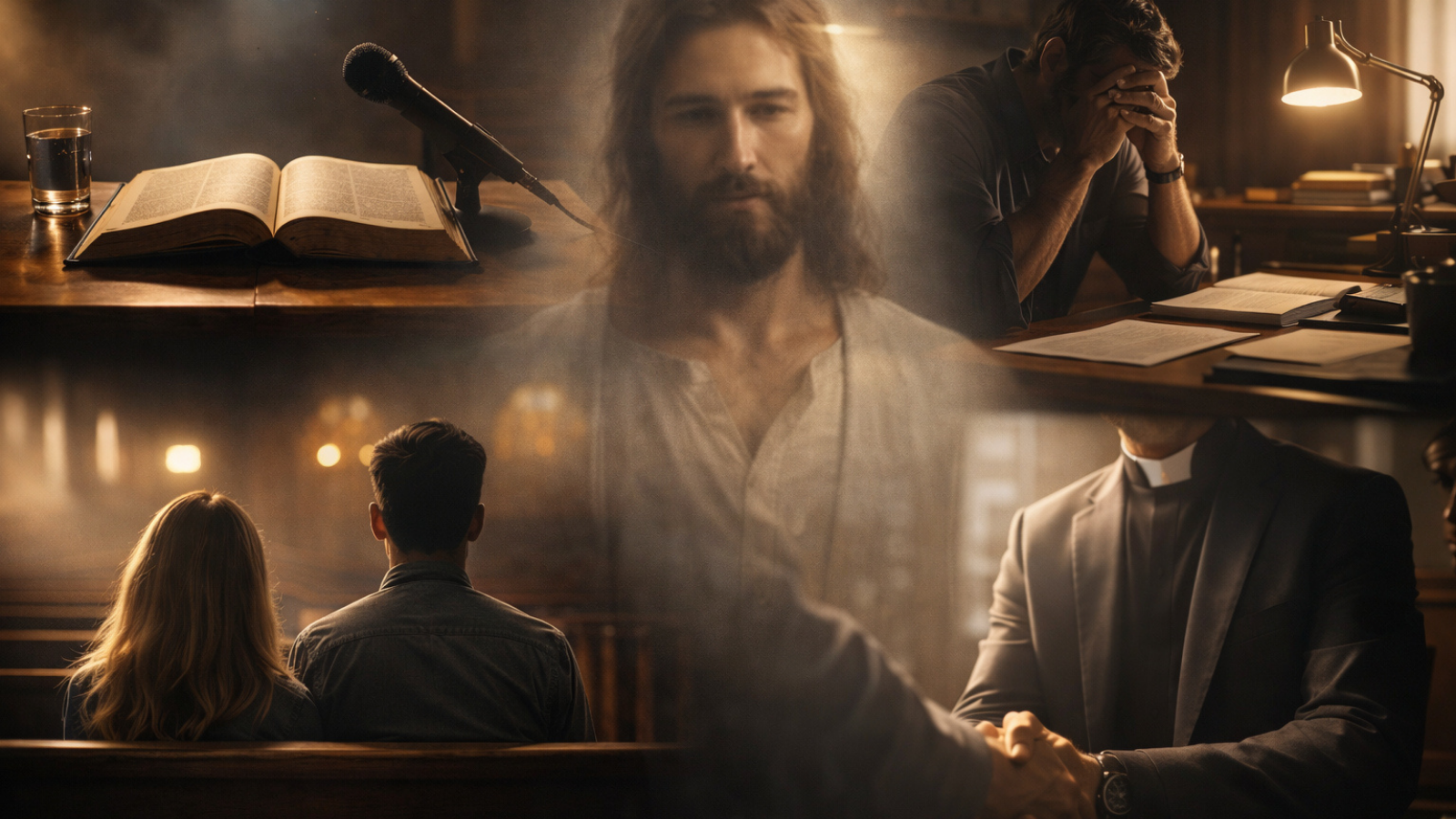
When the Pulpit Loses Its Moral Authority
“‘You clean the outside of the cup…’ (Matt. 23:25). When what’s preached doesn’t match what’s practiced, disenchantment grows.”
Disillusionment, Double Standards, and the Price of Ignored Hypocrisy
A sense of disillusionment is spreading within the Church, subtle, profound, and intensely personal. This feeling does not stem from a denial of Scripture, truth, or even holiness. Instead, it arises from disappointment. From confusion. From observing leaders who declare righteousness with fervor yet evade it consistently. Today, many believers are not turning their backs on Jesus. They are distancing themselves from systems that are vocal yet selective in their actions. The outcome is not rebellion; it is sheer exhaustion.
The Disenchantment No One Wants to Name
Disenchantment typically does not manifest as anger. Instead, it presents itself as silence. It appears as if devoted individuals are gradually withdrawing, not due to a lack of concern, but because they have cared deeply for an extended period without witnessing integrity align with the rhetoric. The source of this disenchantment is not merely moral failure. It is the hypocrisy that accompanies it. We tend to highlight specific sins, often those that are cultural, external, and comfortably removed, while remaining silent about others that are much closer to home. In the meantime, the dysfunction within leadership structures is downplayed, spiritualized, or discreetly handled to safeguard the institution. The Scriptures speak directly to this kind of hypocrisy: "Woe to you, teachers of the law and Pharisees, you hypocrites! You clean the outside of the cup and dish, but inside they are full of greed and self-indulgence" (Matthew 23:25). Jesus did not condemn their longing for holiness; rather, he condemned how they practiced it.
A Selective Prophetic Voice Creates a Cynical People
The Church weakens its moral standing when it opts to show bravery only in select circumstances. We fervently deliver sermons about the challenges that lie "out there," yet we hesitate when the chance of accountability threatens our comfort, reputation, or influence "in here." Over time, people stop seeing conviction and start noticing contradiction. Peter’s words remain uncomfortably pertinent: “For it is time for judgment to begin with God’s household” (1 Peter 4:17). In the absence of self-examination, the message begins to feel hollow. Disillusionment grows as followers realize that the values preached to the audience are rarely upheld by those in the limelight. And people notice this, not out of cynicism, but because they are genuinely observant.
When Silence Feels Like Betrayal
One of the most troubling elements contributing to disenchantment is silence. Silence when abuse remains unrecognized. Silence when power is misused. Silence when ethical shortcomings are subtly hidden behind the facade of "unity." Dietrich Bonhoeffer warned about this danger: “Silence in the face of evil is itself evil. Not to speak is to speak. Not to act is to act.” When leaders fail to address internal misconduct while continuously criticizing external issues, people do not feel led; rather, they feel manipulated. Over time, trust erodes. “Whoever conceals their sins does not prosper, but the one who confesses and renounces them finds mercy” (Proverbs 28:13). Disenchantment flourishes in the absence of confession, where the focus shifts from genuine repentance to managing one's public image.
Why People Are Tuning Out, Not Turning Away
Many followers today do not expect their leaders to be flawless. Instead, they value consistency. The warning from Jesus still rings true: "Why do you look at the speck of sawdust in your brother’s eye and pay no attention to the plank in your own eye?" (Matthew 7:3). Disillusionment grows when the congregation is urged to repent while leaders avoid it from the pulpit. When those in authority call for change, yet hesitate to reflect on their own actions. When public displays of righteousness clash with private compromises. Over time, individuals do not stop believing; they stop listening. Not out of a disregard for truth, but because truth that lacks integrity feels manipulative.
The Disenchanted Are Not the Problem
It is crucial to express this clearly: Disenchanted believers are not defiant, resentful, or lacking in faith. Many are profoundly devoted to Jesus. Many have served with dedication. Many have remained longer than necessary, wishing for change. What they are responding to is not a sense of conviction, but rather inconsistency. They are wary of observing leaders select which battles to fight while neglecting their own households. Until this situation improves, many believe that the most faithful action is to withdraw rather than engage in something that no longer seems genuine.
A Better Way Forward: Integrity Before Proclamation
This is not an appeal for the Church to remain quiet. It is a plea for the Church to gain credibility. Consider the possibilities if leaders: acknowledged their faults openly instead of defensively, embraced accountability instead of shunning it, confronted internal wrongdoing with the same urgency as they do external matters, and prioritized individuals over platforms and truth over appearances The psalmist reminds us: “The sacrifices of God are a broken spirit; a broken and contrite heart, O God, you will not despise” (Psalm 51:17). Disenchantment doesn't necessarily lead to leaving. It can serve as a gateway to change, provided that leaders are open to hearing it.
Resolution: How the Church Regains Its Voice
The Church doesn't find its voice by simply raising the volume. It finds it by embracing authenticity. Moral authority isn't restored through cultural battles or well-crafted sermons, but through humility, repentance, and integrity that begins at the leadership level and spreads throughout the entire community. When leaders are eager to address their own issues with the same fervor they use to criticize the outside world, the disillusioned start to feel hopeful once more. And with the return of hope, trust follows. Not because the Church is flawless, but it has finally embraced honesty.
Where This Leaves Us
If we refuse to thoroughly, honestly, and unconditionally clean our own house, we lose our moral authority. When we demand repentance but fail to show it, and when we preach accountability without practicing it, our words become meaningless. The Church doesn't require louder voices directing attention outward while neglecting the issues within. Until we commit to holding ourselves to the same standards we advocate, we should refrain from acting as prophetic voices. For truth devoid of integrity is merely noise. And if we are not prepared to undertake the difficult, humble task of putting our own house in order, then perhaps the most faithful action we can take, for a time, is to sit quietly, listen, and allow repentance to take the lead.

When the Sign Became the Center: A Needed Conversation About the Holy Spirit and Mission
Have we subtly shifted from mission to manifestation? This post explores whether the modern emphasis on tongues aligns with the biblical purpose of Spirit empowerment in Acts and the Great Commission.
Let’s have an honest conversation for a moment. There has been a change in certain areas of the contemporary charismatic movement. It’s not universal. It doesn’t apply to every congregation. However, it’s significant enough that we must recognize it. The Holy Spirit, intended to empower the Church in its mission, has in some contexts become the focal point of experience rather than the driving force behind our witness. This change is important. When the focus changes, everything else follows suit.
What Jesus Actually Said
In Acts 1:8, He says: “You will receive power when the Holy Spirit has come upon you, and you will be my witnesses…” That statement is clear. It does not imply, "You will gain power merely to experience something." It does not suggest, "You will gain power to possess a higher spiritual status." It states power… for testimony. The Spirit was sent so that timid followers could transform into courageous messengers. The direction is outward, Jerusalem, Judea, Samaria, and the farthest reaches of the earth. The coming of the Spirit is directly linked to the spread of the gospel. Mission is not an added benefit of the Spirit. Mission is the core purpose. The Commission Was Already Clear. Jesus had already given the command in Matthew 28:18–20: “Go therefore and make disciples of all nations…” The sole directive in that passage is to "make disciples." So, let’s pose this question: How can ordinary, fearful individuals make disciples of entire nations? They cannot. Not without divine power. Therefore, they wait. They are "clothed with power from on high" (Luke 24:49). And when the Spirit descends in Acts 2, something extraordinary occurs, not merely on an emotional level, but on a mission-driven one. Yes, tongues are spoken. But what comes next? Public proclamation. Christ is preached. Repentance is called for. Three thousand are baptized. The Spirit descends, and the gospel moves forward. That’s the established pattern.
Tongues in Context
Now, let's confront the conflict head-on. Indeed, tongues are mentioned in Acts 2. However, they are not mere random ecstatic utterances devoid of meaning. Instead, they are comprehensible to the nations that were there. They proclaim the magnificent deeds of God. They act as a sign that the gospel is intended for all. Then, Peter rises to proclaim Christ's crucifixion. Tongues supported the mission. They were not the mission itself. This distinction is crucial.
When Fascination Replaced Focus
Fast forward to Corinth. In 1 Corinthians 12–14, Paul addresses a church that had become captivated by specific spiritual gifts, particularly tongues. So, what action does he take? He doesn’t prohibit the gift. However, he will not allow it to overshadow everything else. He reminds them that not everyone can speak in tongues. The Spirit allocates gifts according to His own will. Love surpasses any gift. Five clear words hold more value than ten thousand words that cannot be understood. Everything should contribute to the growth of the Church. Paul’s correction is both subtle and impactful. The question isn’t about the existence of the gift. The real question is whether the gift has become the focal point. And that’s where we must reflect honestly in our own time.
The Modern Drift
In certain charismatic settings today, speaking in tongues has subtly transformed into: The foremost indication of Spirit baptism, the standard for spiritual maturity, the crucial sign of authenticity, and the emotional climax of worship services. When this occurs, the focus shifts. Instead of Spirit to Christ and Christ to Mission, it shifts to: Spirit to Manifestation and Manifestation to Experience. This may seem minor, but it is significant. When manifestation takes precedence, mission is relegated to a secondary role. When experience is the yardstick, obedience becomes a matter of choice. When tongues are worn as a badge, love and courage can often be overlooked. And that deviates from the pattern established in Acts.
What the Spirit Actually Does
Scripture clearly outlines the priorities of the Spirit: He brings glory to Christ, He convicts us of our sins, He cultivates the fruits of the Spirit, love, joy, peace, and patience, He empowers us to be witnesses, and He strengthens the community of believers. The most evident sign of the Spirit's presence is not ecstatic utterances. It is a life shaped by the cross. It is the courage to stand firm against opposition. It is a love that requires sacrifice. It is unwavering faithfulness in challenging times. It is a commitment to making disciples. If we can speak in tongues yet remain silent about Jesus to our neighbors, there is a disconnect. If we can demonstrate power during a service but lack the bravery to stand up in public, something is amiss.
The Hard Truth
This is where things become uncomfortable. When we position speaking in tongues as the primary indicator of Spirit baptism, we establish a theological foundation that Scripture does not require. By suggesting that those who do not speak in tongues are in any way spiritually deficient, we go against Paul’s explicit teaching that not everyone speaks in tongues. When we evaluate spirituality based on manifestations instead of mission, we have altered our focus. If we are truthful, some of the beliefs we defend fervently are not rooted in biblical necessity, but rather in inherited traditions. We have constructed systems around personal experiences. At times, we have mistaken intensity for authenticity.
If We Want to Get Back to Mission
If the Spirit was sent to empower the Church for the Great Commission, we must confront some difficult questions. Are we recognized more for our manifestations than for our missionary presence? Are we concentrating more on what occurs during our gatherings than on what transpires in our communities? Are we more enthusiastic about signs than we are about making disciples? If the answer is yes, even in part, then returning to our mission demands more than mere adjustments. It calls for repentance. Not repentance from the Spirit. But repentance from misguided theological foundations. We must relinquish the notion that a secondary sign serves as the primary evidence of spiritual vitality. We must discard any theology that establishes spiritual hierarchies within the body. We must let go of the allure of spectacle if it diverts us from obedience. And we must reclaim this fundamental truth: The Holy Spirit was not given to enhance the Church's image. He was given to ensure the Church's faithfulness as faithful witnesses, faithful disciples, and faithful proclaimers of a crucified and risen King. Until we return to that core, we will keep confusing manifestation with mission. And the world does not require more spiritual performances. It needs a Spirit-empowered Church that genuinely makes disciples.