What Happened to the American Church?
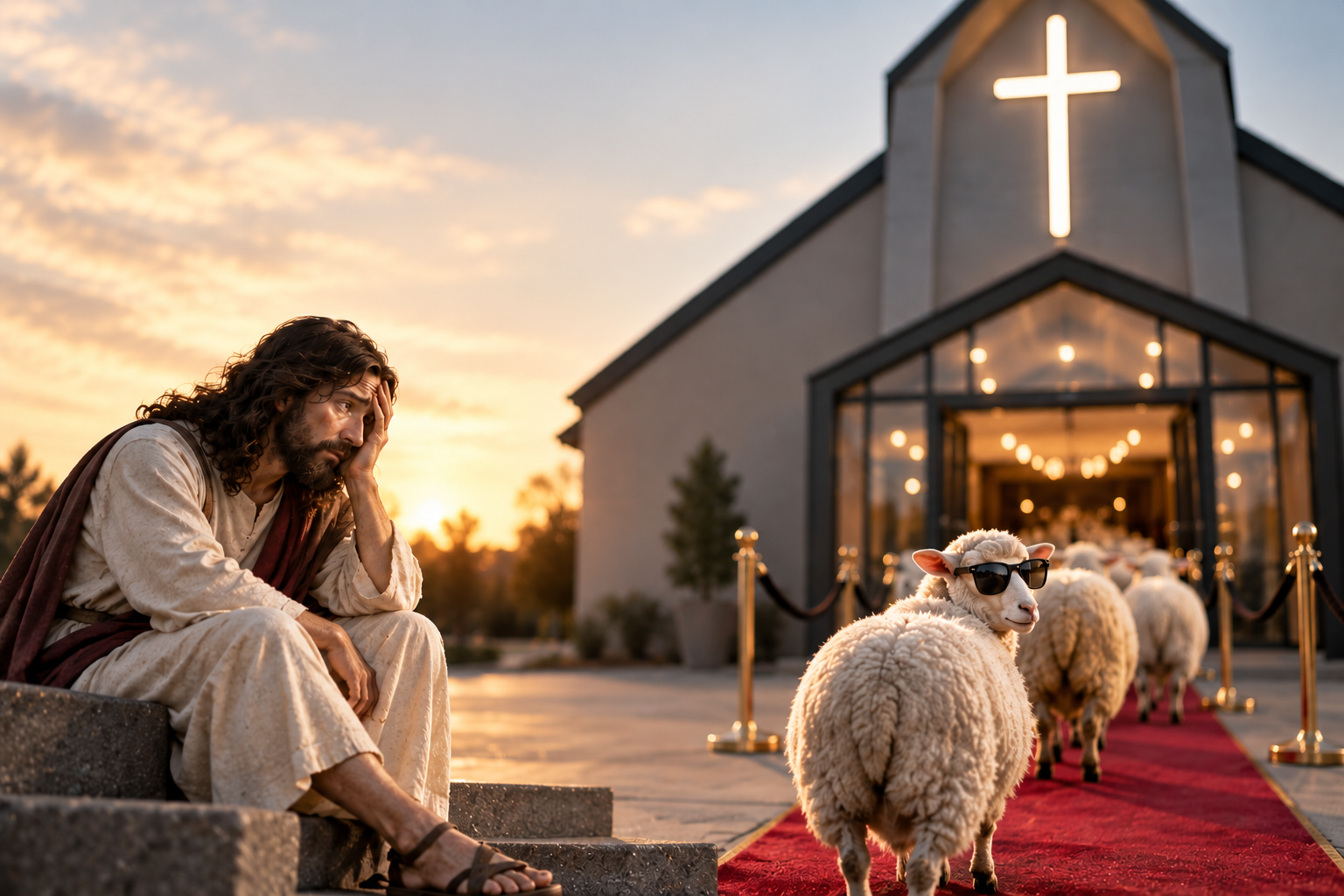
When Growth, Celebrity, and the Church Model Began Competing With Discipleship
For some time, I have been wrestling with a question that initially seemed relatively simple: What happened to the American Church? We hear constantly that Christianity is declining, younger generations are leaving, church attendance isn't what it once was, and Americans are becoming increasingly disconnected from organized religion. There is truth in all of that. But the more I have thought about it, the less convinced I am that declining attendance tells the whole story. I wonder if what we are witnessing is not simply a crisis of numbers, but a deeper crisis of discipleship, formation, credibility, and what we have come to define as a successful church.
The numbers certainly deserve our attention. Pew Research Center's 2023–24 Religious Landscape Study found that 62% of American adults identify as Christian, down from 78% in 2007. During that same period, the percentage of religiously unaffiliated Americans rose from 16% to 29%. Christianity also continues to lose more people through religious switching than it gains. Pew found approximately six former Christians for every person who was raised without a religion and later became Christian. Yet there is an important qualification: the decline appears to have slowed considerably in recent years. Since around 2019, the Christian share of the population has remained relatively stable, at least temporarily.
So I don't think the most important question is simply, "How do we get the numbers back up?" In fact, I think focusing primarily on that question may be part of how we got here.
My thesis is this: The crisis facing the American Church is not simply numerical decline. Over several decades, portions of American Christianity increasingly adopted the logic of consumer culture, attraction, personality, branding, efficiency, scalability, measurable growth, and standardized ministry. Many of these methods helped churches reach people and were not inherently wrong. But when the methods became measurements of spiritual success, we risked becoming better at gathering crowds than forming disciples. Recovering the Church's witness will require more than getting people back into buildings. It will require recovering discipleship, shepherding, accountability, community, biblical depth, and Christlike character as our primary measurements of health.
Something Changed
For generations, American Christianity existed within a culture that helped reinforce church participation. In many communities, going to church was simply what people did. Families attended because their parents attended. Churches functioned as community centers. Christianity carried cultural familiarity and, in some places, even social advantage.
That world gradually changed. America became more religiously diverse, increasingly individualistic, technologically connected, culturally fragmented, and less institutionally religious. Churches faced a legitimate question: How do we reach people who no longer feel obligated to walk through our doors?
Part of the answer came through what became known broadly as the church-growth and attractional movements. Churches began paying greater attention to the visitor's experience. Worship styles changed. Children's ministries expanded. Technology improved. Sermons became more accessible. Churches examined demographic data, removed unnecessary barriers, improved facilities, professionalized communications, and became intentional about reaching people with little connection to traditional church culture.
There was, and still is, good in much of that.
Churches should care whether outsiders can understand what is happening. Pastors should communicate clearly. Children's ministries should be safe and effective. Musicians should prepare. Technology should work. Buildings should be maintained. Churches should think strategically about evangelism.
Excellence isn't the problem.
The question is what happens when a tool that helps accomplish the mission gradually begins to define the mission.
Once attracting people becomes central to the organizational strategy, attendance becomes one of the easiest ways to determine whether that strategy is working. Growth becomes evidence of success. More people require more space. More space requires more money. Larger ministries require more staff. Larger staffs require more sophisticated management. Successful churches develop systems to manage that growth, and other churches understandably want to know how they did it.
Slowly, the question can shift from "Are we faithfully making disciples?" to "Are we growing?"
Those questions can overlap. Healthy churches certainly can grow.
But they are not the same question.
When Christians Became Consumers
Churches didn't create American consumerism. We inherited it from the culture around us.
We evaluate restaurants according to our preferences. We choose entertainment according to what interests us. We select products according to what meets our needs. We customize almost every aspect of our lives.
It shouldn't surprise us that we eventually began approaching churches the same way.
Do I like the music? Is the pastor engaging? Do my children enjoy the children's ministry? Is the service too long? Is the building attractive? Are there programs for my family? Does the church meet my needs?
Churches responded by getting better at meeting those expectations.
Again, that's not necessarily bad.
But consumers and disciples ultimately ask different questions.
The consumer asks, "What am I getting?"
The disciple eventually has to ask, "What am I surrendering?"
Jesus' invitation wasn't primarily to attend something. It was, "Follow me." Following Him involved obedience, sacrifice, service, generosity, repentance, suffering, community, and transformation. Jesus didn't commission His disciples to go into the world and produce church attendees. He told them to make disciples, baptizing them and teaching them to obey what He commanded (Matthew 28:19–20).
That is considerably harder to measure than attendance.
And that may be where part of our problem began.
When the Pastor Became the Brand
American Christianity has always had famous preachers. Celebrity Christianity didn't begin with social media. Radio allowed preachers to reach audiences far beyond their congregations. Television expanded that influence. Christian publishing created nationally recognized authors. Conferences created enormous platforms.
Then the internet removed almost every remaining limitation.
Podcasting, livestreaming, YouTube, multisite video preaching, Facebook, Instagram, and other platforms made it possible for one pastor to influence hundreds of thousands, or millions, of people who had never met him.
That has produced genuine good. People have heard the gospel who otherwise may never have encountered it. Biblical teaching has become more accessible than at virtually any point in history.
But there is another side to it.
Historically, pastoral ministry was substantially relational. The pastor baptized people, visited hospitals, counseled families, officiated funerals, celebrated marriages, knew the people's children, and lived among the congregation.
Celebrity Christianity can reverse that relationship.
Thousands of people know the pastor, while the pastor cannot possibly know them.
And when an organization's growth becomes closely associated with one person's charisma, communication ability, or public platform, something else can happen: questioning the leader can begin to feel like threatening the ministry.
The stakes become enormous. Thousands of people attend because of that communicator. Millions of dollars may flow through the organization. Employees depend upon the church for their livelihood. Campuses may depend upon the pastor's preaching. Books, conferences, podcasts, and ministries may depend upon his reputation.
Suddenly accountability becomes complicated because the organization may develop an institutional incentive to protect the personality upon whom much of the organization depends.
That does not mean famous pastors are inherently corrupt. It doesn't mean large churches are inherently unhealthy.
It means celebrity creates structural temptations that churches should be willing to acknowledge.
When Successful Churches Became Templates
We didn't simply begin following successful pastors. We started copying successful churches. The church grew rapidly, and other pastors attended their conferences. They studied the small-group model. They adopted the leadership structure. They purchased the sermon resources. They copied the volunteer system. They studied the children's ministry. They adopted the branding philosophy. They reproduced the worship format. They learned the language. Consultants began teaching these systems. Books explained them. Conferences celebrated them. Networks distributed them.
Eventually, successful church methods could begin resembling reproducible business systems: discover what works, document it, standardize it, train people to reproduce it, measure performance, and scale it.
From an organizational perspective, that can be brilliant.
But churches aren't franchises.
A church in rural Georgia doesn't necessarily need to look like a suburban church in Dallas. A congregation ministering in an impoverished urban neighborhood shouldn't automatically operate like a church in an affluent suburb. A congregation of 150 doesn't need to pretend it's a congregation of 15,000.
Different communities have different wounds, questions, cultures, histories, and needs.
Interestingly, the New Testament demonstrates exactly that.
Corinth had Corinthian problems. Galatia had Galatian problems. Ephesus had Ephesian problems. Thessalonica had Thessalonian problems.
Paul proclaimed the same gospel, but he didn't write every congregation the same letter.
Same truth. Different people. Different problems. Different application.
That is contextual shepherding.
And Then the Sermons Started Looking Alike
The same problem can occur in preaching.
Pastors today have access to an extraordinary amount of material. We can watch thousands of sermons, purchase complete sermon series, download illustrations, study another pastor's outlines, access enormous theological libraries, and now use artificial intelligence to assist research and preparation.
Those resources can make pastors better teachers.
But convenience creates temptation.
There is a profound difference between beginning with "What does God's Word say, and what do the people God has entrusted to me need to hear?" and beginning with "What are successful churches preaching right now?"
A shepherd knows his people.
He knows three families buried loved ones this month. He knows marriages are struggling. He knows young adults are questioning Christianity. He knows unemployment has hit the community. He knows political division damages relationships. He knows addiction is destroying families. He knows the congregation has become spiritually complacent.
Then he opens Scripture and asks what God's Word says to these people, in this place, at this moment. That's pastoral preaching. When sermons become interchangeable content, something is lost. The sermon might still be excellent. But we should ask whether anyone is actually shepherding the people hearing it.
The Congregation Became an Audience
Think about how easily a modern worship service can begin resembling an audience experience. The lights dim. Stage lights rise. Professional musicians lead worship. Screens direct attention. A gifted communicator speaks. People watch. Then everyone leaves.
None of those elements individually proves anything is unhealthy. I am not arguing against lights, screens, excellent musicians, or gifted preaching.
The deeper question is what kind of Christian the entire system is forming.
Are we participants in the Body of Christ or spectators consuming Christian content?
Paul's description of the Church is intensely participatory. First Corinthians 12 describes believers as interconnected members of one body. Acts 2 describes Christians learning, praying, eating, sharing possessions, and living together. Titus 2 assumes mature Christians will participate in the forming of younger believers.
Christianity was never intended to consist of a handful of professionals doing ministry while everyone else watches. Yet in some church models, we may have unintentionally trained people to believe that ministry happens on the stage.
We Asked Sunday Morning to Do Too Much
This leads directly to discipleship.
Somewhere along the way, many churches began expecting the weekly service to carry almost the entire burden of Christian formation. Sunday morning became responsible for worship, evangelism, biblical education, community, pastoral care, spiritual formation, and discipleship.
That's an enormous expectation for an hour or two.
Consider someone who attends church three Sundays each month and hears approximately thirty minutes of preaching each time. That amounts to roughly 18 hours of preaching over an entire year.
Meanwhile, that same person may spend hundreds or thousands of hours consuming entertainment, social media, podcasts, political commentary, advertising, and other forms of digital content.
Then we wonder why culture sometimes forms Christians more effectively than the Church does.
The answer isn't necessarily longer sermons. The answer is recognizing that discipleship was never supposed to be confined to sermons. Jesus didn't lecture the twelve for forty minutes once a week. He lived with them.
They watched Him pray. They watched Him handle opposition. They watched Him treat outsiders. They watched Him use authority. They watched Him serve. They asked questions. They misunderstood Him. They failed. He corrected them. They tried again.
Discipleship happened in relationship. Maybe our problem isn't simply that Christians aren't hearing enough sermons. Maybe we're expecting sermons to accomplish something that requires a community.
Big Isn't Bad, and Small Isn't Automatically Biblical
This is where I want to be especially careful. This article is not an argument against megachurches.
Hartford Institute for Religion Research's 2026 study estimates that approximately 1,850 megachurches now attract roughly one in every six Protestant worshipers in America on a typical weekend, despite accounting for less than 1% of Protestant congregations. Hartford's research also describes considerable adaptation, investment in ministry, leadership development, community engagement, and renewed vitality among many large churches.
There are healthy megachurches. There are unhealthy megachurches. There are healthy churches of seventy-five people. There are unhealthy churches of seventy-five people. A small church can have an authoritarian pastor, financial secrecy, nepotism, shallow preaching, spiritual manipulation, and no meaningful accountability. A large church can have plural leadership, financial transparency, biblical preaching, strong discipleship, healthy community, and tremendous impact.
This isn't ultimately a criticism of church size. It's a criticism of church culture.
The question isn't how many people are sitting in the room. The question is what the church is producing in them.
Crowds Are Easy to Count. Disciples Are Harder.
Attendance matters. Conversions matter. Baptisms matter. Giving matters. Church planting matters. Those things are worth celebrating. But none of those statistics alone tell us whether Christians are becoming more like Christ.
We can count how many people were baptized. It's harder to measure how many are still following Jesus five years later. We can count attendance. It's harder to measure forgiveness. We can measure giving. It's harder to measure generosity. We can count decisions. It's harder to measure holiness. We can measure social-media reach. It's harder to measure humility.
Crowds are easy to count. Disciples are difficult to measure.
And organizations naturally gravitate toward things they can measure.
What if church annual reports included different questions?
Are our people reading and understanding Scripture? Are marriages becoming healthier? Are believers serving their neighbors? Are mature Christians discipling younger Christians? Are people learning to forgive? Are our leaders accountable? Are Christians becoming more generous? Are we producing people characterized by love, joy, peace, patience, kindness, goodness, faithfulness, gentleness, and self-control?
Those measurements would be messier. But perhaps they would tell us more about church health.
The Culture Is Watching
This conversation doesn't stay inside our buildings because the way Christians live affects Christianity's public witness.
Pew found something fascinating about how Americans perceive religious institutions. Eighty percent believe churches and other religious organizations bring people together and strengthen community bonds. Seventy-eight percent believe they play an important role in helping the poor and needy.
Those numbers matter because they show that Americans haven't simply concluded that churches contribute nothing valuable.
But the other side of Pew's findings should get our attention.
Fifty-nine percent of Americans believe religious organizations are too concerned with money and power. Fifty-four percent say they focus too much on rules, and 54% believe they are too involved in politics. Overall, 51% of Americans expressed a positive view of religious institutions, compared with 63% in 2014.
That's an extraordinary tension. People recognize the good churches accomplish. But many also question what churches have become. Perhaps some people aren't simply saying, "I want nothing to do with Christianity." Maybe they're saying, "I'm struggling to reconcile the Christianity you proclaim with the Christianity I see."
That is a credibility problem.
We Need to Know Why People Reject Us
Jesus warned that His followers would experience opposition. Christianity inevitably conflicts with some cultural values. The Church should never alter biblical truth simply because biblical truth becomes unpopular.
But Christians need enough humility to distinguish between two very different forms of rejection.
There is being rejected because we faithfully represent Jesus, and there is being rejected because we represent Him poorly. If someone rejects Christianity because Jesus calls people to repentance, that's one thing. If someone rejects Christianity because a pastor abused authority while the institution protected him, that's something entirely different. If someone rejects Christianity because biblical teaching conflicts with their worldview, that's one thing. If someone rejects Christianity because Christians appear obsessed with money, political influence, celebrity, and power while preaching humility and servanthood, that's another.
We shouldn't mistake the consequences of our own failures for persecution because of our faithfulness.
Politics Has Complicated the Witness
Christians have every right to participate in politics, and biblical convictions inevitably affect how Christians think about public issues. The danger appears when Christianity becomes difficult to distinguish from political identity. When Christianity becomes synonymous with Republicanism, we have a problem. When Christianity becomes synonymous with progressivism, we have the same problem.
The Church should be capable of prophetically challenging every political tribe, including whichever tribe happens to occupy most of its pews. Otherwise, politics can begin discipling Christians more effectively than Scripture.
Pew's finding that 54% of Americans believe religious organizations are too involved in politics suggests this perception is already widespread. The answer isn't abandoning public life. It's remembering that the Church does not exist to become the religious department of a political coalition. Our ultimate allegiance belongs to Christ.
What About Revival?
This brings me back to something that originally sparked this entire conversation.
American Christianity talks constantly about revival. We pray for it. Preach about it. Hold conferences around it. Sometimes an unusually powerful worship service, emotional response, extended altar call, or prolonged gathering is quickly described as revival. But biblically, encounters with God produce something beyond the moment. When Zacchaeus encountered Jesus, his relationship with money changed. When people responded to Peter's preaching at Pentecost, Acts says they devoted themselves to teaching, fellowship, breaking bread, prayer, and generosity. When the gospel transformed people in Ephesus, they abandoned practices incompatible with their new allegiance.
Encounter produced transformation.
Emotion isn't wrong. Powerful worship isn't wrong. Spiritual gifts aren't wrong. Altar calls aren't wrong.
But spiritual intensity should never be confused with spiritual maturity.
Someone can cry during worship and refuse to forgive. Someone can speak in tongues and gossip. Someone can prophesy and treat people terribly. Someone can preach about revival while refusing accountability. Someone can attend church every Sunday and never become a disciple.
Jesus said trees are recognized by their fruit. Perhaps before declaring revival, we should occasionally ask: What happened six months later?
Who Pastors the Pastor?
Celebrity and organizational growth make another question increasingly important.
It's not enough for a church to say, "Our pastor is accountable."
We should ask:
Accountable to whom?
Can that person genuinely tell the senior leader no? Can staff members challenge him without risking their employment? Can a board independently investigate allegations? Are finances transparent? Is there a mechanism for reporting misconduct that doesn't require reporting directly to someone dependent on the accused leader?
And beyond institutional accountability, who knows the pastor when the microphone is turned off?
Who knows whether his marriage is healthy? Who knows whether he's spiritually exhausted? Who can tell him he's becoming arrogant? Who challenges his decisions? Who can confront him without fearing retaliation?
Who pastors the pastor?
Celebrity culture can create an extraordinary paradox: a leader can be surrounded by thousands of people while remaining profoundly isolated.
Biblical accountability isn't simply what happens after a leader falls.
Healthy accountability exists to help prevent the fall.
Money Makes This More Complicated
Churches also have financial realities. Staff must be paid. Buildings have mortgages. Campuses cost money. Technology costs money. Programs require resources.
There is nothing unspiritual about acknowledging that.
But the larger an organization becomes, the greater its financial obligations can become.
That creates a question we shouldn't be afraid to examine:
What happens when faithfully confronting people might cause them to leave, but the organizational model financially depends on keeping them?
I'm not arguing that pastors intentionally compromise Scripture to preserve revenue. That would be an unfair generalization. I'm arguing that institutional incentives matter. Every organization, including a church, can become tempted to protect its own survival. That's why biblical mission must remain more important than institutional preservation.
Sometimes faithfulness may cost attendance. Sometimes accountability may cost money. Sometimes telling the truth may damage the brand. Sometimes doing what is right may make the church smaller. A healthy church must be willing to accept that possibility.
So How Do We Change?
The answer isn't returning to the American church of 1955. The past had plenty of problems of its own. Nor is the answer abandoning technology, large churches, contemporary worship, professional staff, multisite ministry, branding, organizational systems, or excellence.
The tools aren't necessarily the problem. Our priorities can be.
We need to redefine success.
Instead of asking only how many people attended, ask who those people are becoming. Instead of celebrating only conversions, develop ways of knowing whether converts are being discipled. Instead of asking only whether the organization is growing, ask whether its accountability grows with it. Instead of asking whether people enjoyed worship, ask whether worship is producing people who live sacrificially from Monday through Saturday. Instead of asking how many volunteers serve church programs, ask how many Christians are serving their neighbors.
Instead of asking whether everyone knows the pastor, make sure someone in the church actually knows everyone. Instead of producing consumers of Christian content, produce Christians capable of discipling someone else.
Pastors need to be shepherds before personalities. Character must matter more than charisma. Church boards need genuine authority. Leaders need environments where they can be questioned without critics automatically becoming enemies. Preaching should emerge from Scripture and address the actual congregation rather than merely reproducing what worked somewhere else.
And churches need to become communities again.
Meals should matter. Homes should matter. Mentoring should matter. Older Christians forming younger Christians should matter. Confession should matter. Prayer should matter. Serving the poor should matter. Knowing our neighbors should matter. Walking with people through suffering should matter.
Those things aren't flashy.
They're extraordinarily difficult to scale.
Maybe that's part of the point.
What Happened to the American Church?
So what happened?
There isn't one villain. It wasn't simply megachurches. It wasn't contemporary worship. It wasn't celebrity pastors. It wasn't church-growth methodology. It wasn't social media. It wasn't politics. It wasn't consumerism. It wasn't secularization.
It was a convergence of cultural and institutional forces.
The culture changed around us, and churches adapted. Much of that adaptation was necessary, and some of it produced tremendous good.
But somewhere along the journey, portions of American Christianity risked adopting measurements Jesus never gave us.
Growth became health. Charisma became leadership. Attendance became discipleship. Experience became transformation. Visibility became influence. Standardization became strategy. Pastors became brands. Sermons became content. Congregations became audiences.
And churches sometimes began resembling scalable organizations more than communities of people learning together how to follow Jesus.
Yet this isn't an obituary for the American Church. Christianity still represents 62% of American adults, and Pew's research suggests its decades-long numerical decline has recently slowed or temporarily leveled off.
There are healthy megachurches. There are faithful small churches. There are pastors serving communities for decades whose names will never trend online. Churches are feeding hungry people, caring for foster children, helping addicts recover, supporting struggling families, mentoring teenagers, sending missionaries, preaching Scripture, and making disciples.
There is tremendous good happening.
The point isn't to condemn the Church.
It's to examine it.
And Scripture repeatedly demonstrates that examination, correction, repentance, and refinement aren't attacks against God's people. They are part of how God forms them.
The Question That Matters
Maybe we've spent too much time asking:
"How do we get people back into church?"
Before answering that, perhaps we need to ask:
"What kind of Church are we asking them to come back to?"
Because our greatest evangelistic strategy may ultimately be credibility.
A Church that tells the truth even when the truth makes us uncomfortable. A Church whose leaders willingly submit to accountability. A Church that welcomes difficult questions. A Church that serves without demanding recognition. A Church that refuses to become an extension of a political party. A Church where spiritual gifts are accompanied by spiritual fruit. A Church where pastors actually shepherd. A Church where people are known. A Church where repentance is something we practice before demanding it from everyone else. A Church that cares more about becoming like Jesus than looking successful.
Maybe we don't need to discover the next great American church model. Maybe we need to recover something far older.
Disciples who make disciples.
And perhaps the question that should challenge every pastor, board member, denominational leader, and Christian is this:
If Jesus evaluated our churches today, would He use the same measurements we put in our annual reports?
Attendance can tell us who came. Giving can tell us what was contributed. Baptisms can tell us who took an important step. Membership can tell us who joined. Social media can tell us who watched. But none of those numbers, by themselves, answers the most important question:
Who are these people becoming?
Because ultimately, the mission Jesus gave His Church was never to gather crowds.
It was to make disciples.
References & Further Reading
The research below provides statistical and historical context for this article. These sources should not be understood as proving every interpretive argument made above; rather, they provide data that helps us understand the changing religious landscape and raises questions about how the Church should respond.
Pew Research Center. Decline of Christianity in the U.S. Has Slowed, May Have Leveled Off. February 26, 2025. Pew's 2023–24 Religious Landscape Study provides the primary demographic foundation for this article, including the finding that 62% of American adults identify as Christian, compared with 78% in 2007, while 29% are now religiously unaffiliated. It also examines religious switching and the recent stabilization of Christian identification. Read the Pew Research report
Pew Research Center. Religious Identity in the United States. February 26, 2025. This section of the Religious Landscape Study provides a deeper examination of changes within Protestantism, Catholicism, and the religiously unaffiliated population and demonstrates that the long-term shift has occurred across demographic groups and geographic regions. Read Pew's religious identity research
Pew Research Center. Religion's Role in Public Life. February 26, 2025. This research examines Americans' perceptions of religious institutions. While 80% say churches and religious organizations strengthen community bonds and 78% recognize their role in helping the poor and needy, 59% believe religious institutions are too concerned with money and power, 54% say they focus too much on rules, and 54% believe they are too involved in politics. Read Pew's research on religion and public life
Hartford Institute for Religion Research. Megachurch Resurgence 2026. Hartford's national study provides an important counterbalance to simplistic claims that large churches are failing. Researchers estimate that approximately 1,850 megachurches attract roughly one in six Protestant worshipers on a typical weekend, while documenting adaptation, community engagement, leadership development, and renewed vitality within many large congregations. Explore Hartford's 2026 megachurch research
Biblical Sources. The theological argument throughout this article draws particularly from Matthew 5:14–16; Matthew 7:16–20; Matthew 23; Matthew 28:18–20; Luke 19:1–10; John 13:34–35; John 15:18–20; Acts 2:37–47; Acts 19:18–20; Romans 12; 1 Corinthians 12; Galatians 5:22–23; Colossians 2:6–7; 1 Timothy 3; 2 Timothy 4:1–5; Titus 1–2; 1 Peter 5:1–4; and Jude 22.
Statistics can measure affiliation, attendance, religious switching, institutional trust, demographics, and organizational growth. They cannot directly measure genuine conversion, holiness, spiritual maturity, faithfulness, or the work of the Holy Spirit. That distinction is important to the thesis of this article. The statistics can help us understand what is happening. Scripture gives us the standard by which we must ask whether what is happening represents health.