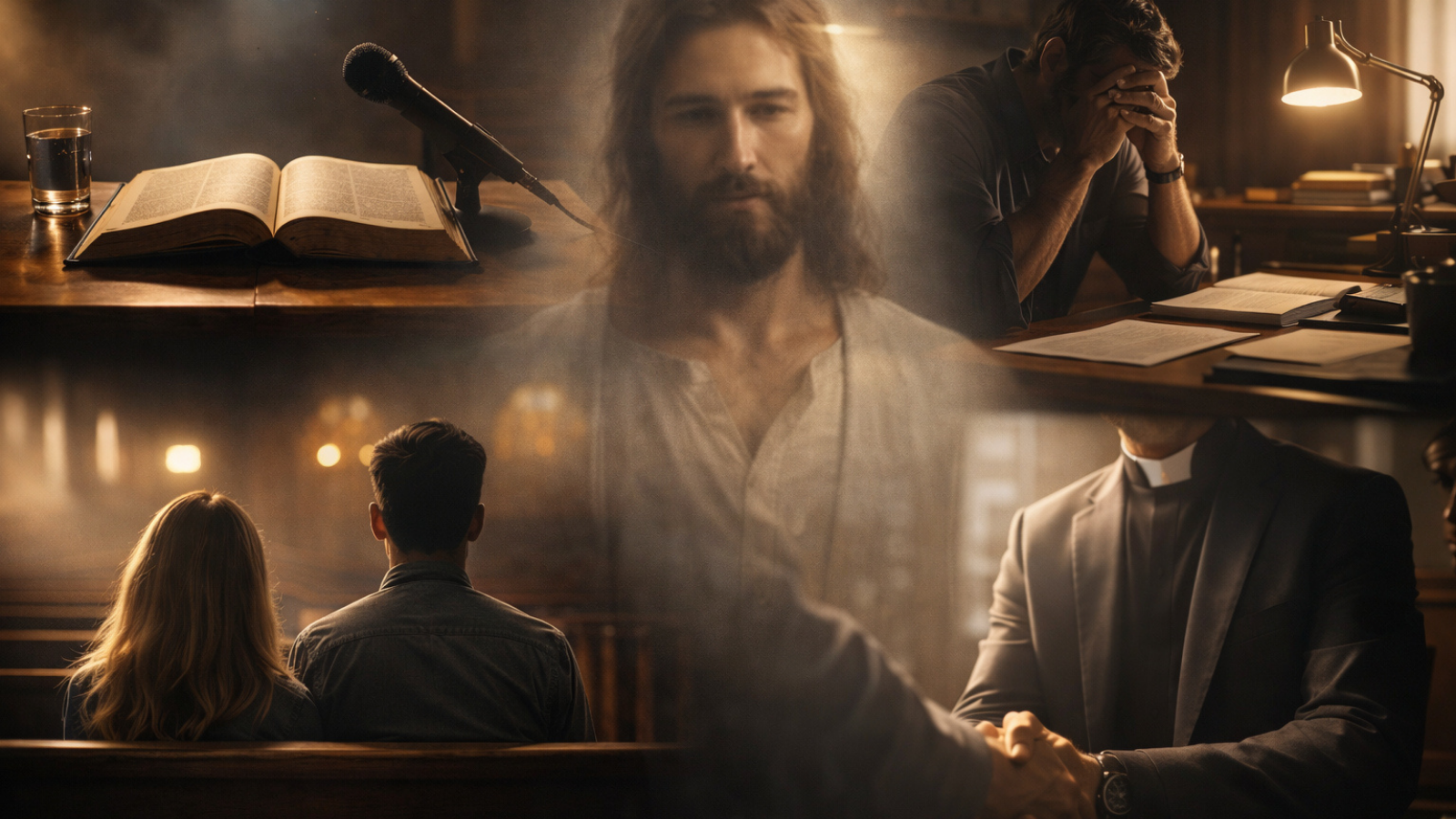
When the Pulpit Loses Its Moral Authority
“‘You clean the outside of the cup…’ (Matt. 23:25). When what’s preached doesn’t match what’s practiced, disenchantment grows.”
Disillusionment, Double Standards, and the Price of Ignored Hypocrisy
A sense of disillusionment is spreading within the Church, subtle, profound, and intensely personal. This feeling does not stem from a denial of Scripture, truth, or even holiness. Instead, it arises from disappointment. From confusion. From observing leaders who declare righteousness with fervor yet evade it consistently. Today, many believers are not turning their backs on Jesus. They are distancing themselves from systems that are vocal yet selective in their actions. The outcome is not rebellion; it is sheer exhaustion.
The Disenchantment No One Wants to Name
Disenchantment typically does not manifest as anger. Instead, it presents itself as silence. It appears as if devoted individuals are gradually withdrawing, not due to a lack of concern, but because they have cared deeply for an extended period without witnessing integrity align with the rhetoric. The source of this disenchantment is not merely moral failure. It is the hypocrisy that accompanies it. We tend to highlight specific sins, often those that are cultural, external, and comfortably removed, while remaining silent about others that are much closer to home. In the meantime, the dysfunction within leadership structures is downplayed, spiritualized, or discreetly handled to safeguard the institution. The Scriptures speak directly to this kind of hypocrisy: "Woe to you, teachers of the law and Pharisees, you hypocrites! You clean the outside of the cup and dish, but inside they are full of greed and self-indulgence" (Matthew 23:25). Jesus did not condemn their longing for holiness; rather, he condemned how they practiced it.
A Selective Prophetic Voice Creates a Cynical People
The Church weakens its moral standing when it opts to show bravery only in select circumstances. We fervently deliver sermons about the challenges that lie "out there," yet we hesitate when the chance of accountability threatens our comfort, reputation, or influence "in here." Over time, people stop seeing conviction and start noticing contradiction. Peter’s words remain uncomfortably pertinent: “For it is time for judgment to begin with God’s household” (1 Peter 4:17). In the absence of self-examination, the message begins to feel hollow. Disillusionment grows as followers realize that the values preached to the audience are rarely upheld by those in the limelight. And people notice this, not out of cynicism, but because they are genuinely observant.
When Silence Feels Like Betrayal
One of the most troubling elements contributing to disenchantment is silence. Silence when abuse remains unrecognized. Silence when power is misused. Silence when ethical shortcomings are subtly hidden behind the facade of "unity." Dietrich Bonhoeffer warned about this danger: “Silence in the face of evil is itself evil. Not to speak is to speak. Not to act is to act.” When leaders fail to address internal misconduct while continuously criticizing external issues, people do not feel led; rather, they feel manipulated. Over time, trust erodes. “Whoever conceals their sins does not prosper, but the one who confesses and renounces them finds mercy” (Proverbs 28:13). Disenchantment flourishes in the absence of confession, where the focus shifts from genuine repentance to managing one's public image.
Why People Are Tuning Out, Not Turning Away
Many followers today do not expect their leaders to be flawless. Instead, they value consistency. The warning from Jesus still rings true: "Why do you look at the speck of sawdust in your brother’s eye and pay no attention to the plank in your own eye?" (Matthew 7:3). Disillusionment grows when the congregation is urged to repent while leaders avoid it from the pulpit. When those in authority call for change, yet hesitate to reflect on their own actions. When public displays of righteousness clash with private compromises. Over time, individuals do not stop believing; they stop listening. Not out of a disregard for truth, but because truth that lacks integrity feels manipulative.
The Disenchanted Are Not the Problem
It is crucial to express this clearly: Disenchanted believers are not defiant, resentful, or lacking in faith. Many are profoundly devoted to Jesus. Many have served with dedication. Many have remained longer than necessary, wishing for change. What they are responding to is not a sense of conviction, but rather inconsistency. They are wary of observing leaders select which battles to fight while neglecting their own households. Until this situation improves, many believe that the most faithful action is to withdraw rather than engage in something that no longer seems genuine.
A Better Way Forward: Integrity Before Proclamation
This is not an appeal for the Church to remain quiet. It is a plea for the Church to gain credibility. Consider the possibilities if leaders: acknowledged their faults openly instead of defensively, embraced accountability instead of shunning it, confronted internal wrongdoing with the same urgency as they do external matters, and prioritized individuals over platforms and truth over appearances The psalmist reminds us: “The sacrifices of God are a broken spirit; a broken and contrite heart, O God, you will not despise” (Psalm 51:17). Disenchantment doesn't necessarily lead to leaving. It can serve as a gateway to change, provided that leaders are open to hearing it.
Resolution: How the Church Regains Its Voice
The Church doesn't find its voice by simply raising the volume. It finds it by embracing authenticity. Moral authority isn't restored through cultural battles or well-crafted sermons, but through humility, repentance, and integrity that begins at the leadership level and spreads throughout the entire community. When leaders are eager to address their own issues with the same fervor they use to criticize the outside world, the disillusioned start to feel hopeful once more. And with the return of hope, trust follows. Not because the Church is flawless, but it has finally embraced honesty.
Where This Leaves Us
If we refuse to thoroughly, honestly, and unconditionally clean our own house, we lose our moral authority. When we demand repentance but fail to show it, and when we preach accountability without practicing it, our words become meaningless. The Church doesn't require louder voices directing attention outward while neglecting the issues within. Until we commit to holding ourselves to the same standards we advocate, we should refrain from acting as prophetic voices. For truth devoid of integrity is merely noise. And if we are not prepared to undertake the difficult, humble task of putting our own house in order, then perhaps the most faithful action we can take, for a time, is to sit quietly, listen, and allow repentance to take the lead.